
Algodocs

Logistics

supply chain data extraction
Logistics Data Extraction

Supply Chain Data Extraction: How IDP and AI can Transform Data Extraction and Enhance Work Efficiency

Back to Blog Table of contents On this page Supply Chain Data Extraction: How IDP and AI can Transform Data Extraction and Enhance Work Efficiency Home › Blog › Logistics Data Extraction › Supply Chain Data Extraction: How IDP and AI can Transform Data Extraction and Enhance Work Efficiency Categories Logistics Data Extraction Tags ai platform for data extraction algodocs IDP intelligent document processing Logistics Supply Chain By Shubhankar Biswas Published September 1, 2025, 09:12 Updated July 23, 2026, 06:41 The global supply chain industry is expected to reach $30.91 billion by the end of 2030, according to a report. As it continues to grow rapidly worldwide, so do the challenges of supply chain data extraction, due to the rise in business activities and the diversity of document formats and styles. In today’s dynamic global market, supply chain management is crucial for any business’s success. Companies face a constant stream of paperwork, such as invoices, purchase orders, shipping documents, and compliance reports. Manually handling this overwhelming volume of documents is not only time-consuming and tedious but also susceptible to human error. These inefficiencies increase operational costs and hinder overall productivity. This is where Intelligent Document Processing (IDP) emerges as a game-changer for the supply chain industry. By harnessing the power of Artificial Intelligence (AI), Optical Character Recognition (OCR), and Machine Learning (ML), IDP enhances the efficiency, speed, and accuracy of supply chain document data extraction. It automates document workflows with AI and ML, leading to significant improvements in data extraction accuracy, work efficiency, and ultimately, decision-making capabilities for organizations. Understanding Intelligent Document Processing (IDP) and AI for Logistics and Supply Chain Intelligent Document Processing (IDP) is an AI- and ML-driven data extraction and document workflow process that automates data extraction from various types of documents without errors. It can efficiently automate the extraction, classification, and validation of data from a wide range of documents such as bills of lading, purchase orders, invoices, shipping labels, warehouse receipts, and reports. Unlike traditional OCR, which simply converts printed text into machine-readable text, IDP leverages AI and ML to interpret, analyze, and extract meaningful data with utmost accuracy. Key Components of IDP AI and Machine Learning: These technologies empower IDP systems to learn from data patterns and continuously improve data extraction accuracy over time. This adaptive learning capability is crucial for handling diverse document formats and layouts. Optical Character Recognition (OCR): OCR serves as the foundation by converting scanned documents and images into machine-readable text, making the information accessible for further processing. Natural Language Processing (NLP): NLP enables IDP solutions to understand and categorize data within unstructured documents, such as contracts or emails, extracting key information from complex textual content. Robotic Process Automation (RPA): RPA complements IDP by automating repetitive tasks, such as data entry and validation, further streamlining workflows and reducing manual intervention. Cloud Integration: Cloud integration ensures seamless document access and processing across multiple locations and devices, fostering collaboration and accessibility. The Vital Role of IDP in Supply Chain Data Extraction Supply chain management is a critical network involving multiple stakeholders, from manufacturers and suppliers to logistics providers and retailers. Efficient document processing is essential for a seamless workflow, yet manual data extraction lacks efficiency, speed, accuracy, and cost-effectiveness when handling large volumes of supply chain documents. IDP plays a pivotal role in automating document-heavy tasks, ensuring data accuracy, and accelerating operations. Key Benefits of IDP in Supply Chain Data Extraction and Document Workflow Management Enhanced Data Accuracy: Data is the backbone of every business, and accuracy is crucial. In the supply chain sector, where data is gathered from multiple sources, extracting, sorting, and analyzing this data with precision is paramount. Manual data extraction is prone to errors, but IDP eliminates this issue with AI- and ML-driven technology, ensuring improved data integrity and reliability. Increased Operational Efficiency: Manual data extraction is inefficient and lacks scalability. IDP streamlines document processing by automating data extraction and validation, accelerating workflows, and freeing up valuable human resources for strategic tasks, significantly enhancing operational efficiency. Cost Reduction: Automation minimizes labour costs associated with manual data entry and document handling. IDP performs these tasks with little to no human intervention, optimizing costs for organizations. Improved Compliance and Data Security: Data security and compliance are critical for businesses. Many countries have enacted strict data security laws to protect user and business data. IDP ensures compliance with regulatory requirements by automating document verification and storage, minimizing the risk of compliance breaches, and protecting data from unauthorized access. Seamless Integration: IDP solutions integrate with existing ERP and supply chain management systems, creating a unified and efficient digital ecosystem, which is not feasible with manual data extraction methods. IDP Use Cases in Supply Chain Data Extraction IDP technology significantly optimizes supply chain operations by automating various document-intensive processes, including: Invoice Processing: Manual invoice data extraction is time-consuming and prone to errors. IDP automates invoice data extraction, validation, and entry into ERP systems, reducing processing time and improving accuracy. Purchase Order Management: IDP extracts critical data from purchase orders, ensuring alignment with supplier invoices and delivery receipts, preventing discrepancies, enhancing procurement efficiency, and minimizing order fulfilment issues. Bill of Lading and Shipping Documents: IDP automates data extraction from Bill of Lading, which contain crucial shipment details, reducing processing delays and improving logistics efficiency, leading to faster deliveries and better customer satisfaction. Compliance and Regulatory Documents: IDP automates document verification and storage, ensuring adherence to industry regulations and minimizing the risk of penalties and legal issues. Supplier and Vendor Management: IDP streamlines vendor onboarding by automating document verification, contract management, and performance tracking, fostering stronger vendor relationships. Packing List Processing: IDP extracts essential data such as item descriptions, quantities, weights, and dimensions from packing lists, ensuring accurate and efficient processing. Proof of Delivery (POD): IDP enhances POD data extraction by digitizing documents, extracting key details such as delivery dates, recipient signatures, addresses, and item descriptions, ensuring accurate record-keeping and improved supply chain efficiency. Implementing IDP in Supply Chain Document Workflow and Data Extraction To fully leverage the benefits of IDP for supply chain document data extraction, companies should follow a structured implementation process: Identify Document Processing Needs: Assess current

packing list data extraction
Algodocs

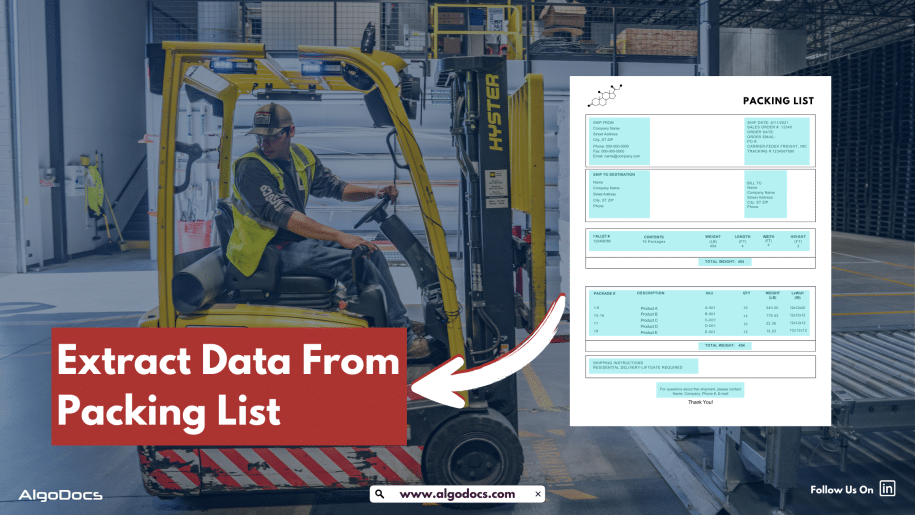
How to Automate Packing List Data Extraction: A Practical Guide

Back to Blog Table of contents On this page How to Automate Packing List Data Extraction: A Practical Guide Home › Blog › Algodocs › How to Automate Packing List Data Extraction: A Practical Guide Categories Algodocs Tags ai platform for data extraction algodocs invoice Logistics machine learning packing list ocr By Shubhankar Biswas Published September 1, 2025, 07:38 Updated July 21, 2026, 05:30 A packing list document is essential in freight, cargo, logistics, warehousing, and other industries worldwide. This document contains information about the items, such as their weight, quantity, seller information, buyer information, and destination. Packing list data extraction might not seem like the most exciting task in the world, but if you’re part of a business dealing with logistics, shipping, or supply chain operations, you already know how important these documents are. As straightforward as it sounds, extracting data from these lists can quickly turn into a time-consuming and error-prone chore, especially when done manually. Manual data extraction is slow and full of human errors, which can lead to many organizational troubles, such as increased costs for data extraction. However, using AI-based tools such as Intelligent Document Processing can improve data extraction accuracy, speed, and elevate work efficiency from packing list documents. In this article, we will discuss what a packing list document is, where it is used, the challenges of extracting data from packing lists, how AI-based tools such as Intelligent Document Processing can solve this issue and automate packing list data extraction, and how Algodocs is a game changer for automating packing list data extraction using AI and ML technology. What is a packing list document? A packing list document is a detailed checklist used in shipping to show what’s inside a package or shipment. It includes the product names, quantities, and descriptions of items, along with packaging details (like boxes or bags). Unlike an invoice, it focuses only on the shipment’s contents without mentioning prices. Packing lists help avoid errors, ease customs checks for international shipments, and allow receivers to verify their goods. For senders, it ensures everything planned is shipped; for transporters, it offers clarity for delivery; for receivers, it provides a quick confirmation of their items. It’s a simple yet vital tool in logistics. Where Packing List Document is Used? Packing list documents are widely used in industries involved in shipping, logistics, and trade. Here are some key industries where they play a vital role: Manufacturing: To ensure the safe and accurate delivery of products to customers or distributors. Retail and E-commerce: For tracking and verifying items during order fulfilment and delivery. Import and Export: To comply with customs regulations and ensure smooth international shipping. Freight and Logistics: For managing cargo and verifying shipment contents. Construction: To track materials and equipment deliveries to project sites. Packing lists are crucial for maintaining transparency and accuracy in these industries. So, What is Packing List Data Extraction? Packing list data extraction refers to the process of extracting key information from packing list documents. This data includes product names, item quantities, weights, buyer and seller information, packing details, etc. Packing list documents are used in logistics, shipping, and supply chain operations. You can manually extract data from a packing list, which involves a human doing this, or you can use automated tools such as a packing list OCR tool or AI-based intelligent document processing to automate data extraction from packing list. The Challenges With Manual Data Extraction from Packing List Manually extracting data from packing lists might work when you’re dealing with just a handful of shipments, but scale that up, and it becomes a nightmare. Here’s why manual methods are often more trouble than they’re worth: It Takes Forever: You have to carefully comb through each document, hunting for the information you need. It’s boring and eats up tons of time. Mistakes Happen: Humans get tired, and it’s easy to misread numbers, miss details, or make typos. It’s Expensive: Paying people to sit and type data all day isn’t exactly cost-effective. It’s Hard to Keep Up: As your business grows and you handle more shipments, the workload becomes unmanageable. Packing Lists Aren’t Standardized: They come in all shapes and sizes, so it’s not always clear where to find the info you need. Clearly, manual data entry isn’t the best way to go. Thankfully, technology offers a better option. Automate Packing List Data Extraction With AI When it comes to automating packing list data extraction, two key technologies do most of the heavy lifting: Optical Character Recognition (OCR) and Artificial Intelligence (AI). Try Algodocs Packing List AI OCR For Free What’s OCR? OCR is a technology that turns text in scanned documents (or even photos) into machine-readable data. So, if you’ve got a packing list in PDF or image format, OCR can “read” it and pull out the info you need. Pretty cool, right? Here’s what makes OCR so useful: Recognizes Text: It doesn’t matter if the text is printed, typed, or handwritten—OCR can handle it. Works with Templates: You can tell it what fields to look for (like product names or quantities), and it’ll find them. Supports Different Formats: Whether it’s a clean digital PDF or a scanned, slightly crooked image, OCR can adapt. How AI Makes It Even Better AI takes OCR to the next level with solution like intelligent document processing, the entire data extraction from packing list document can be automated with one click. Instead of just following templates, AI can actually “understand” the data it’s extracting, adapting to different layouts and contexts. Here’s what AI brings to the table: Smarter Extraction: It can recognize patterns and figure out where specific info is located, even in unstructured documents. Learning Capabilities: The more it’s used, the better it gets. Language Support: Perfect for businesses that deal with global shipments. Together, OCR and AI make automating packing list data extraction not just possible but incredibly efficient. Why Automate Packing List Data Extraction Automation isn’t just a buzzword—it actually solves a lot of the issues we talked about earlier. Here’s what you get by automating your packing list data

invoice extraction, Logistics Data Extraction

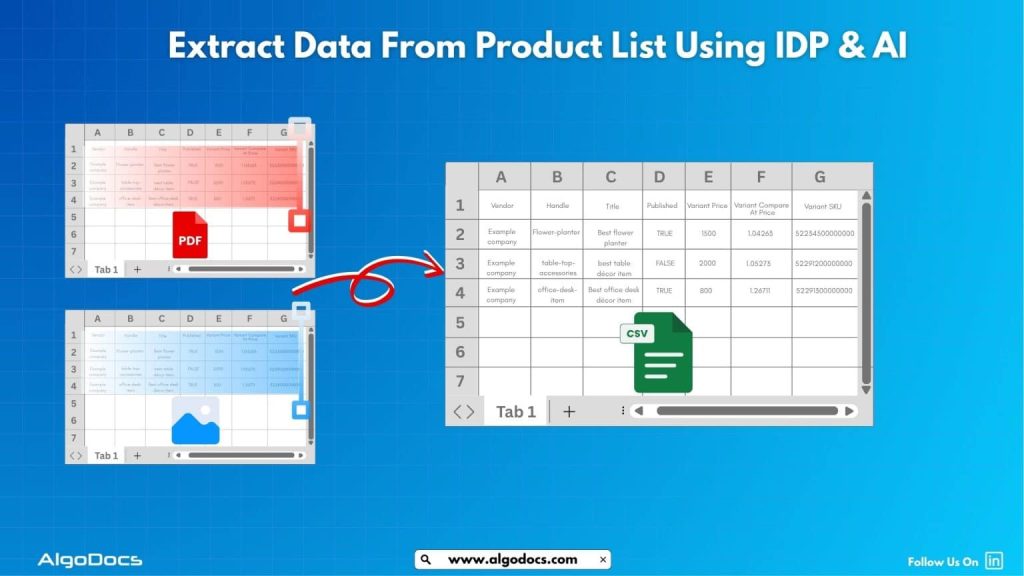
SKU List Data Extraction With Artificial Intelligence and IDP: Benefits, Features, Risks & More

Back to Blog Table of contents On this page SKU List Data Extraction With Artificial Intelligence and IDP: Benefits, Features, Risks & More Home › Blog › invoice extraction › SKU List Data Extraction With Artificial Intelligence and IDP: Benefits, Features, Risks & More Categories invoice extraction Logistics Data Extraction Tags data extraction Invoice Data Extraction Logistics By Shubhankar Biswas Published September 1, 2025, 06:42 Updated July 21, 2026, 08:07 What is An SSKU List Data Extraction With Artificial Intelligence and IDP: Benefits, Features, Risks & MoreKU List? The paradigm shift of global shoppers has changed from offline to online in recent years. The eCommerce industry is currently a $7.5 trillion economy and is growing at a very fast pace according to a report. This rapidly growing eCommerce economy has given birth to many big platforms as well as small eCommerce businesses. Many traditional retail businesses have transitioned their business model from offline channels to online channels in recent years. And this transition has increased their sales and revenue. Now eCommerce businesses thrive on many factors such as their business model, where their customers are, how they want to target their customers, and how the sold product will be delivered to the customer. Unlike a physical store that is only able to display and market a limited number of inventory items, an online store is able to display and share countless numbers of items without requiring much space and manpower. With such a large number of products and items, businesses need to maintain a list of product data which is known as an SKU list. An SKU list is used in both online and offline channels. But data extraction from an SKU list is a challenging task. Due to the number of items, various fields, and tables, data extraction becomes a challenging task. The old manual data extraction method is prone to human errors and data accuracy remains a big challenge. But with tools such as SKU list OCR, intelligent document processing, and Artificial Intelligence, SKU data extraction has become more accurate, speedy, and efficient. In this blog post, we will discuss various aspects of SKU list data extraction, including its challenges, benefits, and other key considerations. What is An SKU List? An SKU list or Stock Keeping Unit is a list of products that shows the available and sold inventory of a store. An SKU list consists of details such as product name, title, variants, color variants, size variants, SKU number, product URL, price variants, availability, etc.This helps businesses to maintain a record of what products have been sold and what is in stock, with all corresponding details of product types, variants, etc. In both online and offline businesses, the SKU list plays a vital role, but specifically in online and eCommerce businesses, it holds major importance. Difference between SKU List vs. Product List: There are many types of documents used on a day-to-day basis in online and offline businesses for various types of business activities. Documents such as bills, invoices, SKU lists, packing lists, and purchase orders are a few essential documents that are frequently used in business. But every document is different; similarly, an SKU list and a packing list are two different documents. But sometimes people get confused and consider the SKU list as a packing list. Here are the differences: Feature Packing List SKU List Purpose Details shipment contents Tracks products in inventory Scope Focuses on shipped items Covers all stock in a system Usage Used in logistics and shipping Used in warehousing and retail Contents Item descriptions, weights, packaging details Product codes, descriptions, stock levels Format Structured for shipping documentation Formatted for inventory databases Tracking Ensures shipment verification Monitors stock movement and availability Customization Focuses on shipment accuracy Includes pricing and supplier details Regulatory Role Required for customs clearance and freight calculations Not required for shipping Verification Helps buyers confirm received goods Helps businesses manage stock levels Integration Linked to shipping and order fulfilment Integrated with inventory management systems What is the Purpose of an SKU List in eCommerce? The real purpose of an SKU list is to keep a record of the items that are available or being sold by a store or business. This helps businesses manage their inventory and keep a record of which products are in stock and which have been sold. Secondly, when an online business or store fulfills an order, they can ensure that the right product has been packed and shipped to the logistics company. The third important role of an SKU list is to help with product listing in both online stores and offline stores. If a business sells its product on multiple online eCommerce platforms, then with a single SKU list, you can manage your product listings across all channels. Analysis and reporting of sold and unsold products can also be done with the SKU list.A well-maintained SKU list is the backbone of smooth eCommerce operations. But extracting and organizing this data can be tricky. What is SKU List Data Extraction? SKU list data extraction means extracting information such as product names, titles, variants, SKU ID, size, color, availability, and other information from an SKU list using automated software. The main purpose of SKU list data extraction is to improve workflow efficiency for logistics, product listing, and other decision-making activities for an online or offline store. A typical SKU list is usually generated in Excel or CSV format, but in some cases, it could be a scanned image PDF, native PDF, handwritten note, or JPG image as well.Extracting data from a long and bulky SKU list manually isn’t efficient, but tools such as SKU list OCR and Intelligent Document Processing have made this task more efficient and smoother. Challenges with SKU List Data Extraction Extracting data from an SKU list manually is not very reliable for a business. Manual SKU list data extraction poses great challenges such as: Multiple Formats:SKU lists generally come in Excel format, but sometimes they can be PDFs, scanned images, or emails as

Scroll to Top