
Proof of Delivery Data Extraction Using AI & IDP: How to Streamline Logistics Business Document Workflow in 2026
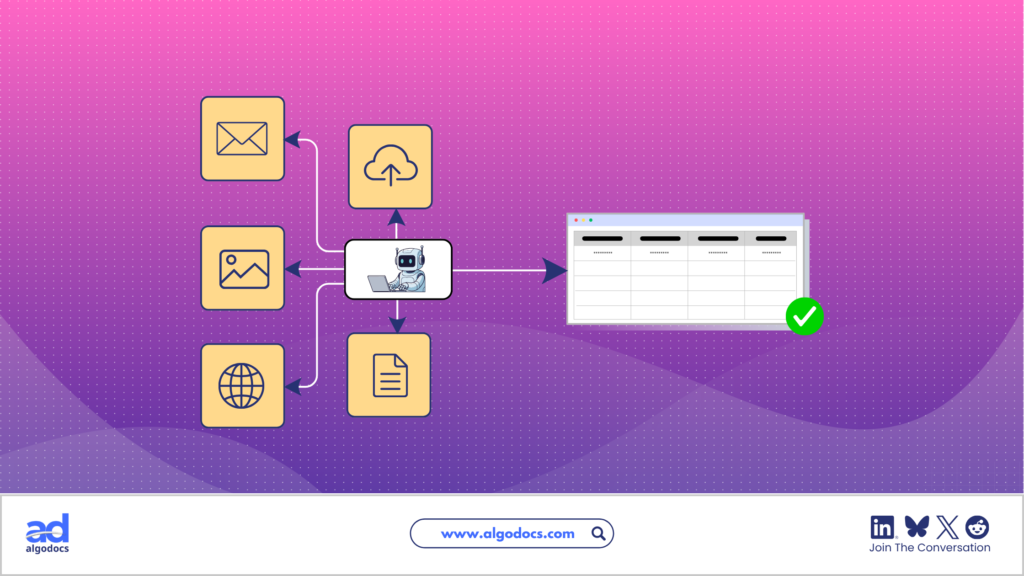
Back to Blog Table of contents On this page How To Streamline Logistics Business Document Workflow In 2026 Using Proof of Delivery Data Extraction Home › Blog › Logistics Data Extraction › Proof of Delivery Data Extraction Using AI & IDP Categories Logistics Data Extraction Tags Proof of Delivery Extraction Logistics Data Extraction API By Shubhankar Biswas Published October 15, 2026, 11:35 The global logistics industry is a $10.2 trillion USD market in 2023 and is expected to grow at a CAGR of 7.3%, and it is expected to reach $20.1 trillion USD by 2023, according to Allied Market Research data. Logistics and shipping industries deal with various types of documents on a day-to-day basis. These documents could be bills of lading, purchase orders, seaway bills, invoices, or proof of delivery documents, which are most common for successful business operations. However, the majority of these documents are either paper documents, handwritten notes, scanned image documents, or PDFs. Managing and extracting data from these documents poses great organizational challenges. Recent data from Cargoclix show that 45.5% of logistics companies still rely on paper data rather than digital document formats. Trans info’s analysis of proof of delivery shows that as much as 99% of EU international road transport still relies on paper data. Paper PODs can be lost, arrive late, carry illegible signatures, or contain errors, and disputes over them can take days or weeks to settle, which holds up invoices and payments. But the rise of AI-based data extraction tools and ML solves this proof of delivery data extraction problem by automating every step of the data extraction process. With the help of AI and IDP (Intelligent Document Processing), data extraction from POD documents and other logistics documents can be accelerated with greater accuracy and speed. In this guide, we will discuss the role of AI, IDP, and ML in proof of delivery data extraction, how it works, the challenges with POD data extraction, the best tools, and other aspects. Proof of delivery data extraction closes this gap. It combines proof of delivery OCR, machine learning, and logistics IDP (Intelligent Document Processing) to read each POD and turn it into structured data that your systems can use. This guide explains how it works, where manual methods break down, how the leading tools compare, and how to choose the right approach for your operation. TL;DR Proof of delivery data extraction automatically reads POD documents and captures fields such as delivery date, recipient, signature, shipment number and exception notes. Proof of delivery OCR only converts an image into text. IDP adds layout understanding, validation and system integration. Manual document handling is a major hurdle: 82% of respondents in a transport and logistics back office survey said it remains a significant challenge. Automation speeds up invoicing, flags damage and shortage notes early and gives finance and operations one clean data source. Five tools worth testing: Algodocs, Klippa, Affinda, Lido and Kognitos. No tool verifies signature authenticity. The original receipt remains the evidence. What Is Proof of Delivery Data Extraction and How It works? Proof of delivery data extraction is the process of using AI and intelligent document processing technologies to capture and extract key details from a POD document, such as the delivery date, recipient name, signature, and shipment reference, in a structured data format so that logistics, billing, and ERP systems can use them for other business operations. POD extraction tools can capture and extract the following fields from proof of delivery documents: Delivery date and time Recipient or signatory name Signature present or missing Tracking, PRO, order or shipment reference Delivery address or stop reference Items and quantities delivered Carrier and driver details Exception notes such as damage, shortage or refusal How Proof of Delivery Data Extraction Works Proof of delivery (POD) data extraction uses Intelligent Document Processing (IDP), which combines AI technologies to upload, read, extract, validate, and export data from delivery documents. First, the POD document is uploaded to an AI-based IDP platform. The platform combines Optical Character Recognition (OCR) with machine learning (ML) and natural language processing (NLP). If the POD is a scanned image or a scanned PDF, OCR converts it into machine-readable text. If it is a digital PDF, the system reads the embedded text layer directly. Next, the system analyzes the document layout to locate key areas such as headers, tables, line items, and signature fields. ML and NLP models then extract the required details, such as the delivery date, consignee name, shipment number, item quantities, and receiver signature, and convert them into structured fields. The extracted data is then validated. The system checks for missing values, formatting errors, and mismatches against reference data, and flags low-confidence results for human review. Finally, the structured data can be exported in formats such as CSV, Excel, or JSON. It can also be sent to other systems, such as ERP, TMS, or accounting software, through APIs. The exact steps and field names vary by IDP vendor, so check them against the specific tool you are describing. What Is a Proof of Delivery Document in the Logistics & Shipping Industry Proof of delivery is a document that confirms that the shipment was delivered to the correct recipient at the correct address at the specified time and date. You can think of a POD as the final stage in product delivery, indicating that a carrier’s responsibility to the buyer has been fulfilled. A typical proof of delivery document can contain information such as delivery date, time, tracking ID, address, recipient’s signature, etc. Template Based Proof of delivery OCR vs IDP Based Proof of delivery Data Extraction Feature Template-Based OCR IDP (Intelligent Document Processing) Core Technology Extracts text based on strict predefined spatial coordinates (Zonal OCR). Uses AI, Machine Learning, and NLP to understand context and identify data regardless of position. Document Flexibility Rigid. Fails if the document structure, spacing, or margins shift even slightly. Adaptable. Processes varied layouts, multi-page PODs, and unstructured formats seamlessly. Setup & Maintenance Requires manual drawing