
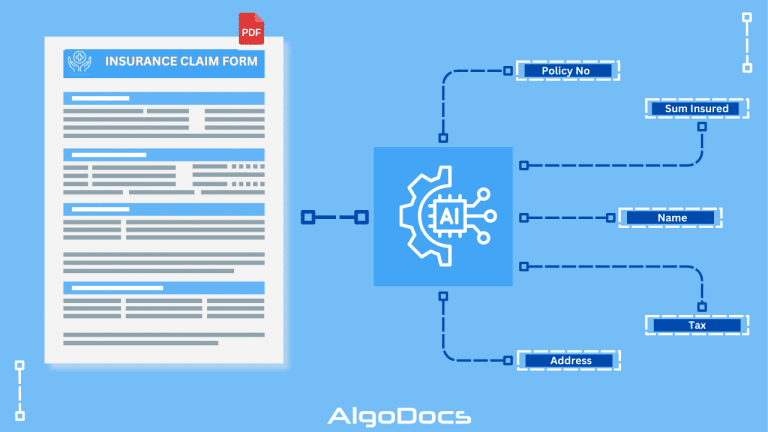
Insurance Data Extraction: Automating Policy and Claim Processing with AI
Back to Blog Table of contents On this page Insurance Data Extraction: Automating Policy and Claim Processing with AI Home › Blog › Data Extraction › Insurance Data Extraction: Automating Policy and Claim Processing with AI Categories Data Extraction Insurance Data Extraction Tags ai platform for data extraction algodocs character recognition deep learning IDP Insurances Data Extraction intelligent document processing By Shubhankar Biswas Published October 12, 2025, 18:20 Updated July 23, 2026, 05:31 The modern insurance sector operates on massive volumes of information and insurance data extraction is a crucial part of insurance industry business process. Every single day, insurance carriers, third-party administrators, brokers, and agencies process thousands of files. These files range from policy applications and loss notices to medical bills, repair estimates, legal notices, and property appraisal reports. Within this ocean of paperwork lies the essential information required to underwrite risks, calculate premiums, settle claims, detect fraud, and maintain regulatory compliance. However, a significant challenge facing the insurance industry today is that up to eighty percent of this critical information arrives in unstructured or semi-structured formats. Scanned PDF files, digital images, physical paper forms, email attachments, and handwritten adjuster notes cannot be directly read or processed by traditional enterprise databases. Historically, companies relied heavily on manual data entry to transfer details from incoming documents into core operational platforms like claims management systems or policy administration suites. Manual processing creates severe bottlenecks. It inflates operational expenses, slows down service delivery, introduces human error, and frustrates policyholders who expect immediate digital service. To overcome these challenges, progressive insurance providers are transitioning toward automated insurance data extraction. Driven by advances in AI OCR, Machine Learning, and Intelligent Document Processing, modern extraction tools allow organizations to transform messy, unformatted files into structured, machine-readable digital data in seconds. This comprehensive guide explores the fundamentals of automated insurance data extraction, examining the types of documents processed, the hidden costs of manual workflows, the business benefits of artificial intelligence, and the leading software solutions shaping the market. What is Insurance Data Extraction? Insurance data extraction is the automated technology process of reading, identifying, capturing, and converting information from paper or digital insurance records into structured digital data formats. Instead of requiring human workers to manually read documents and type values into software screens, an automated insurance data extraction workflow ingests files, interprets their contents, extracts specific data fields, and exports clean data directly into core databases or enterprise applications. The insurance data extraction workflow relies on an integrated stack of advanced technologies: Document Ingestion: The system collects inbound files from multiple channels, including email inboxes, mobile application uploads, scanned physical mail, cloud storage, or secure web portals. Optical Character Recognition (OCR) and AI OCR: Legacy OCR converts scanned document images into text strings. Next generation AI OCR goes further by recognizing complex handwriting, low-resolution scans, and non-standard typography. Intelligent Document Processing (IDP): Combining artificial intelligence with natural language processing, Intelligent Document Processing understands the context and semantic meaning of words. It recognizes that a dollar figure located next to the word deductible represents a specific financial field rather than a premium payment. Machine Learning and Field Validation: Machine learning algorithms continuously improve extraction accuracy over time. Automated validation rules cross check extracted policy numbers, dates, and mathematical totals against internal enterprise databases to verify accuracy. Data Export: Clean, structured data is formatted into structured payloads such as JSON, XML, or CSV, and delivered directly to core policy or claims platforms via APIs. Through AI insurance data extraction, carriers can automate repetitive administrative steps, reduce turnaround times, and establish seamless insurance workflow automation across every department. Types of Documents Used in Insurance Industry for Insurance Data Extraction Insurance carriers handle a vast assortment of forms, reports, and contracts. Each document type possesses unique layouts, terminology, and data extraction requirements. Automated insurance document processing systems are designed to process diverse document types efficiently. 1. Policy Documents and Applications Policy applications and insurance binders represent the foundational agreements between policyholders and carriers. Extracting accurate data during policy origination is crucial for setting terms and issuing coverage. Key documents include: ACORD 125 Applications: The standard commercial insurance application form containing applicant business details, policy effective dates, location details, and requested coverage limits. Policy Schedules and Declarations Pages: Summary pages detailing coverage types, policy numbers, named insureds, endorsement listings, and premium amounts. Endorsement Forms: Amendments to existing policy contracts that modify coverage terms, add new insured assets, or change liability limits. Accurate policy data extraction ensures that customer profiles, coverage clauses, and premium figures match internal records without requiring manual entry. 2. Insurance Claims and Loss Notices When policyholders suffer a loss, rapid claims intake is essential for customer satisfaction. Automated insurance claims data extraction parses critical details from early claims documentation: First Notice of Loss (FNOL) Reports: Initial notifications submitted by policyholders or agents detailing how, when, and where an incident occurred. ACORD Loss Notices: Standardized notices such as the ACORD 2 Automobile Loss Notice or ACORD 3 Property Loss Notice, capturing policy details, driver information, and loss descriptions. Incident and Police Reports: Official law enforcement collision records containing narrative descriptions, driver statements, weather conditions, and citations. Automating insurance claims data extraction accelerates claim registration, enabling immediate assignment to claims adjusters or automated decisioning engines. 3. Medical Records and Healthcare Billing Forms Health, workers compensation, and personal injury protection claims involve complex clinical and billing records. These documents combine typed text, medical terminology, complex codes, and handwritten notes: CMS-1500 and UB-04 Forms: Standard medical billing claim forms used by physicians, medical practices, and institutional healthcare providers. Explanation of Benefits (EOB): Statements sent by health plans explaining covered services, approved amounts, deductible applications, and patient responsibility. Clinical Discharge Summaries and Doctor Notes: Narrative medical charts containing diagnoses, treatment histories, and surgical notes. Automated extraction engines capture critical diagnostic codes such as ICD-10, procedure codes such as CPT, billing line items, and provider identification numbers to streamline health claims auditing. 4. Underwriting Documents and Financial Statements Underwriters must review complex
