Insurance Data Extraction: Automating Policy and Claim Processing with AI
The modern insurance sector operates on massive volumes of information and insurance data extraction is a crucial part of insurance industry business process. Every single day, insurance carriers, third-party administrators, brokers, and agencies process thousands of files. These files range from policy applications and loss notices to medical bills, repair estimates, legal notices, and property appraisal reports. Within this ocean of paperwork lies the essential information required to underwrite risks, calculate premiums, settle claims, detect fraud, and maintain regulatory compliance.
However, a significant challenge facing the insurance industry today is that up to eighty percent of this critical information arrives in unstructured or semi-structured formats. Scanned PDF files, digital images, physical paper forms, email attachments, and handwritten adjuster notes cannot be directly read or processed by traditional enterprise databases.
Historically, companies relied heavily on manual data entry to transfer details from incoming documents into core operational platforms like claims management systems or policy administration suites. Manual processing creates severe bottlenecks. It inflates operational expenses, slows down service delivery, introduces human error, and frustrates policyholders who expect immediate digital service.
To overcome these challenges, progressive insurance providers are transitioning toward automated insurance data extraction. Driven by advances in AI OCR, Machine Learning, and Intelligent Document Processing, modern extraction tools allow organizations to transform messy, unformatted files into structured, machine-readable digital data in seconds.
This comprehensive guide explores the fundamentals of automated insurance data extraction, examining the types of documents processed, the hidden costs of manual workflows, the business benefits of artificial intelligence, and the leading software solutions shaping the market.
What is Insurance Data Extraction?
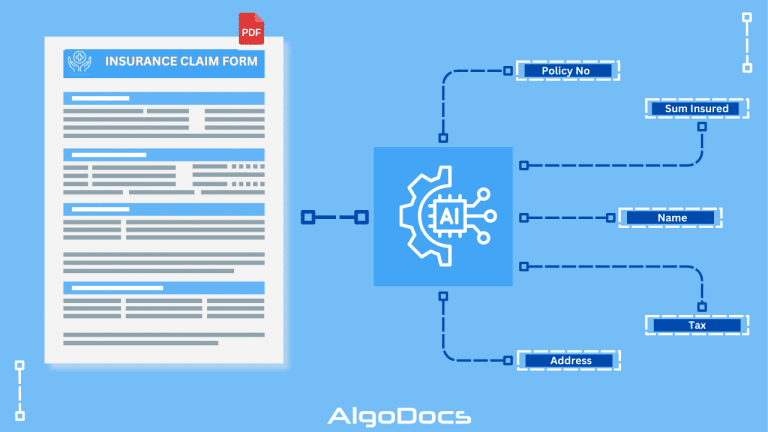
Insurance data extraction is the automated technology process of reading, identifying, capturing, and converting information from paper or digital insurance records into structured digital data formats. Instead of requiring human workers to manually read documents and type values into software screens, an automated insurance data extraction workflow ingests files, interprets their contents, extracts specific data fields, and exports clean data directly into core databases or enterprise applications.
The insurance data extraction workflow relies on an integrated stack of advanced technologies:
- Document Ingestion: The system collects inbound files from multiple channels, including email inboxes, mobile application uploads, scanned physical mail, cloud storage, or secure web portals.
- Optical Character Recognition (OCR) and AI OCR: Legacy OCR converts scanned document images into text strings. Next generation AI OCR goes further by recognizing complex handwriting, low-resolution scans, and non-standard typography.
- Intelligent Document Processing (IDP): Combining artificial intelligence with natural language processing, Intelligent Document Processing understands the context and semantic meaning of words. It recognizes that a dollar figure located next to the word deductible represents a specific financial field rather than a premium payment.
- Machine Learning and Field Validation: Machine learning algorithms continuously improve extraction accuracy over time. Automated validation rules cross check extracted policy numbers, dates, and mathematical totals against internal enterprise databases to verify accuracy.
- Data Export: Clean, structured data is formatted into structured payloads such as JSON, XML, or CSV, and delivered directly to core policy or claims platforms via APIs.
Through AI insurance data extraction, carriers can automate repetitive administrative steps, reduce turnaround times, and establish seamless insurance workflow automation across every department.
Types of Documents Used in Insurance Industry for Insurance Data Extraction
Insurance carriers handle a vast assortment of forms, reports, and contracts. Each document type possesses unique layouts, terminology, and data extraction requirements. Automated insurance document processing systems are designed to process diverse document types efficiently.
1. Policy Documents and Applications
Policy applications and insurance binders represent the foundational agreements between policyholders and carriers. Extracting accurate data during policy origination is crucial for setting terms and issuing coverage. Key documents include:
- ACORD 125 Applications: The standard commercial insurance application form containing applicant business details, policy effective dates, location details, and requested coverage limits.
- Policy Schedules and Declarations Pages: Summary pages detailing coverage types, policy numbers, named insureds, endorsement listings, and premium amounts.
- Endorsement Forms: Amendments to existing policy contracts that modify coverage terms, add new insured assets, or change liability limits.
Accurate policy data extraction ensures that customer profiles, coverage clauses, and premium figures match internal records without requiring manual entry.
2. Insurance Claims and Loss Notices
When policyholders suffer a loss, rapid claims intake is essential for customer satisfaction. Automated insurance claims data extraction parses critical details from early claims documentation:
- First Notice of Loss (FNOL) Reports: Initial notifications submitted by policyholders or agents detailing how, when, and where an incident occurred.
- ACORD Loss Notices: Standardized notices such as the ACORD 2 Automobile Loss Notice or ACORD 3 Property Loss Notice, capturing policy details, driver information, and loss descriptions.
- Incident and Police Reports: Official law enforcement collision records containing narrative descriptions, driver statements, weather conditions, and citations.
Automating insurance claims data extraction accelerates claim registration, enabling immediate assignment to claims adjusters or automated decisioning engines.
3. Medical Records and Healthcare Billing Forms
Health, workers compensation, and personal injury protection claims involve complex clinical and billing records. These documents combine typed text, medical terminology, complex codes, and handwritten notes:
- CMS-1500 and UB-04 Forms: Standard medical billing claim forms used by physicians, medical practices, and institutional healthcare providers.
- Explanation of Benefits (EOB): Statements sent by health plans explaining covered services, approved amounts, deductible applications, and patient responsibility.
- Clinical Discharge Summaries and Doctor Notes: Narrative medical charts containing diagnoses, treatment histories, and surgical notes.
Automated extraction engines capture critical diagnostic codes such as ICD-10, procedure codes such as CPT, billing line items, and provider identification numbers to streamline health claims auditing.
4. Underwriting Documents and Financial Statements
Underwriters must review complex financial and historical risk records before issuing commercial coverage. Standard underwriting documents subject to extraction include:
- Loss Run Reports: Historical claims reports detailing prior losses, paid claim amounts, open reserve figures, and loss dates across previous policy years.
- Financial Statements and Balance Sheets: Corporate financial records used to assess commercial creditworthiness and financial stability.
- Property Inspection Reports: Building appraisal papers detailing structural building materials, fire protection systems, square footage, and property risk ratings.
Extracting structured data from underwriting documents helps automated risk models and underwriters quote policies faster and with greater accuracy.
5. Certificates of Insurance and Proof of Coverage
Businesses frequently request proof of insurance from vendors, contractors, and partners. Document automation platforms process high volumes of standardized certificates:
- ACORD 25 Certificates of Liability: Standard forms summarizing general liability, automobile liability, and workers compensation limits.
- ACORD 28 Evidence of Property Insurance: Declarations verifying commercial property coverage details for lenders and mortgagees.
Automating certificate verification allows businesses to confirm third-party compliance instantly without manual review.
6. Invoices, Repair Estimates, and Receipts
Evaluating property damage or vehicle collisions requires reviewing detailed itemized financial documents:
- Auto Body Shop Estimates: Itemized collision repair quotes listing parts costs, labor hours, paint expenses, and paint codes.
- Contractor Restoration Bills: Property repair invoices for water damage, fire remediation, or roof repairs.
- Medical and Travel Receipts: Expense receipts submitted by policyholders for reimbursement during active claims.
Automated document processing parses line items, tax calculations, and vendor details to verify costs against claim guidelines.
7. Legal and Regulatory Papers
Litigated claims involve legal paperwork that must be tracked to meet strict statutory response deadlines:
- Legal Pleadings and Summons: Formal court documents notifying carriers of legal proceedings.
- Time-Sensitive Demand Letters: Formal settlement demands submitted by claimant attorneys requiring prompt review.
Automated systems identify document types, flag time-sensitive keywords, and route urgent files directly to legal claims teams.
Risks with Manual Insurance Data Extraction
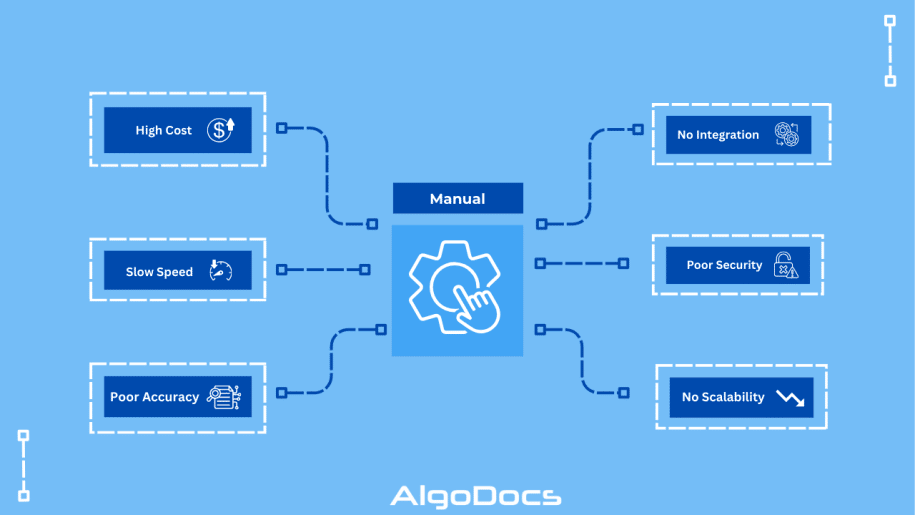
Relying on manual human effort to read, interpret, and type data from insurance documents creates operational vulnerabilities across an enterprise.
1. Excessive Operational Expenses
Manual data entry is labor-intensive and expensive. Employing dedicated data entry clerks or requiring skilled underwriters and claims adjusters to manually retype information increases operational overhead. The cost of processing a single multi-page claim file manually can range from five dollars to over fifteen dollars. Across millions of incoming pages, manual processes consume budgets that could otherwise drive business growth or product innovation.
2. High Error Rates and Costly Inaccuracies
Human operators are vulnerable to fatigue, distraction, and typing mistakes, especially when processing repetitive documents over long shifts. Simple typographical errors in policy numbers, policyholder names, or payment figures lead to serious consequences. A misread claim number can cause misallocated funds, incorrect claim denials, or improper coverage decisions that harm policyholder relationships and lead to regulatory fines.
3. Severe Processing Delays and Backlogs
Manual review creates severe administrative bottlenecks. Processing an incoming paper or PDF file manually takes anywhere from ten to forty-five minutes depending on document complexity. When incoming document volumes surge, backlogs accumulate quickly. Slow processing delays policy issuance, extends claim settlement cycles, and creates friction for policyholders seeking updates.
4. Inability to Scale Operations During Peak Events
Insurance document volume is naturally volatile. Major weather events, natural disasters, or annual open enrollment periods produce huge surges in document volume. Carriers relying on manual extraction cannot scale operations instantly. Hiring, onboarding, and training temporary staff takes weeks, leading to processing delays precisely when fast service is needed most.
5. Security, Privacy, and Compliance Hazards
Physical papers and digital PDF attachments floating around email inboxes pose significant security risks. Manual data handling increases the likelihood of unauthorized exposure of sensitive Personally Identifiable Information (PII) or Protected Health Information (PHI). Failing to protect sensitive customer records exposes carriers to severe penalties under privacy regulations such as HIPAA, GDPR, and state-level data security mandates.
6. Employee Burnout and Reduced Retention
Skilled professionals, including claims adjusters, risk analysts, and underwriters, undergo extensive training to evaluate risk and handle complex human interactions. Forcing these specialists to spend thirty to forty percent of their workday copying data across software systems leads to job dissatisfaction, burnout, and higher employee turnover rates.
Benefits of IDP and AI for Insurance Data Extraction
Adopting Intelligent Document Processing and AI insurance document processing solutions transforms back-office operations into a streamlined, high-performance competitive advantage.
1. Unmatched Operational Speed and Straight-Through Processing
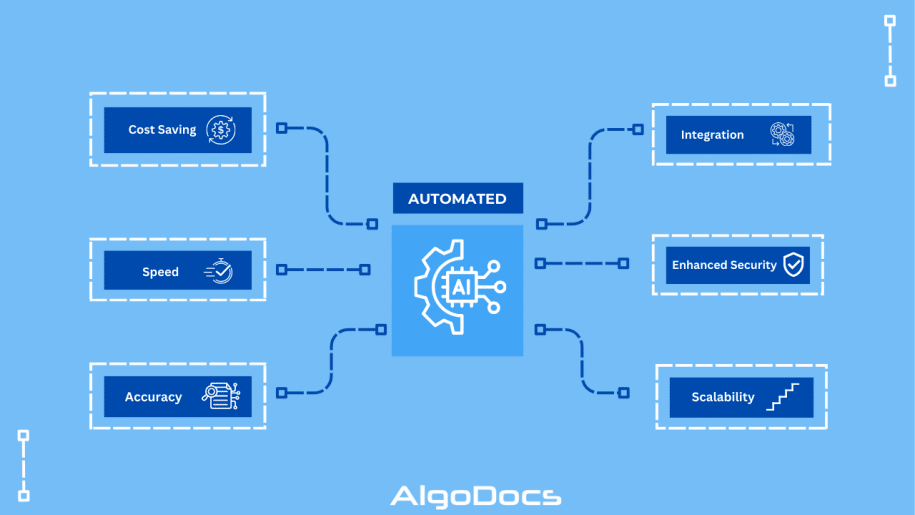
Automated extraction systems process documents in seconds rather than minutes. Using AI OCR and deep learning, an enterprise document platform can read, interpret, and extract field-level data from a complex ten-page claim file in less than three seconds. This speed enables Straight-Through Processing (STP), where standard claims or applications are ingested, validated, and processed automatically without human intervention.
2. Superior Accuracy and AI Data Validation
Modern AI insurance data extraction software delivers field extraction accuracy rates exceeding ninety-eight percent. Advanced machine learning models do not merely read characters; they validate extracted information using contextual rules. For example, the software verifies that zip codes match corresponding states, that line item sums equal total invoice amounts, and that policy numbers exist in core databases before writing the data.
3. Substantial Cost Reductions
Automating routine data capture reduces document handling costs by up to eighty percent. Eliminating manual data entry allows insurance carriers to lower cost-per-claim metrics and administrative overhead. Reallocated funds can then be directed toward strategic risk management, marketing, and modern technology investments.
4. Continuous Scalability During Catastrophic Events
Cloud-native AI data extraction systems provide elastic scalability. During natural disaster claims surges, an automated platform can process a ten-fold increase in daily claims volume without requiring additional staff or experiencing performance degradation. Claims intake remains fast and responsive regardless of volume spikes.
5. Real-Time Fraud Detection and Anomaly Spotting
Fraud represents a multi-billion dollar challenge for the global insurance industry. Automated policy data extraction and claims capture allow artificial intelligence models to analyze incoming text in real time. Intelligent systems cross-reference claims history, identify duplicate invoice submissions, flag suspicious repair quotes, and highlight inconsistent accident narratives long before claim funds are disbursed.
6. Seamless Integration Across Legacy and Modern Systems
Leading insurance data extraction platforms integrate directly into existing IT architecture. Through RESTful APIs, webhooks, and pre-built connectors, extracted JSON or XML payloads flow automatically into enterprise platforms such as Guidewire, Duck Creek, Salesforce Financial Services Cloud, or custom internal management software.
Difference Between Manual vs Automated Insurance Data Extraction
Comparing manual data intake with modern automated insurance data extraction highlights the profound transformation AI brings to enterprise document workflows.
| Feature / Metric | Manual Insurance Data Extraction | Automated Insurance Data Extraction (AI & IDP) |
| Average Processing Speed | 10 to 45 minutes per document | 2 to 5 seconds per document |
| Extraction Accuracy Rate | 85% to 90% (prone to human fatigue) | 98%+ with automated AI validation rules |
| Cost Per Document Processed | High ($5.00 to $15.00+ per document) | Low (Fractions of a cent per page) |
| Handling Unstructured Content | Slow manual reading required | Fast interpretation via Natural Language Processing |
| Handwriting Recognition | Varies by human legibility | High accuracy via trained AI OCR models |
| Volume Scalability | Low (requires hiring temporary staff) | Instant, elastic cloud scaling |
| Data Validation Capability | Manual cross-checking against databases | Real-time automated API validation checks |
| Integration Method | Manual copy-pasting across applications | Direct REST API and webhook database synchronization |
| Audit Trail & Lineage | Inconsistent paper or manual logs | Complete, automated field-level digital audit logs |
| Employee Satisfaction | Low (repetitive clerical data entry) | High (focus on complex decisions and customer service) |
Best Insurance Data Extraction Tools
Selecting the right insurance data extraction software is critical for achieving high accuracy, operational efficiency, and rapid return on investment. The top software solutions shaping the market include:
1. AlgoDocs
AlgoDocs is a powerful cloud-based Intelligent Document Processing platform designed to automate document workflows across insurance, finance, and healthcare industries. Powered by advanced artificial intelligence and machine learning algorithms, AlgoDocs excels at extracting text, key-value pairs, tables, and handwritten data from complex PDF files and scanned images.
- Core Strengths: Offers pre-trained models for standard business and insurance documents alongside custom extraction capabilities. It features advanced smart table extraction that accurately captures multi-page line item details from invoices and repair estimates.
- Key Features: Low-code rule configuration, high handwriting recognition accuracy, automated validation logic, REST API support, and direct webhook integrations.
- Best For: Insurers, agencies, and third-party administrators seeking an accessible, accurate, and highly scalable cloud platform to automate document processing without long implementation cycles.
2. Docsumo
Docsumo is an intelligent document processing software built specifically to handle financial, insurance, and real estate documentation. It leverages domain-specific pre-trained models to extract structured data from complex unstructured files.
- Core Strengths: Strong pre-trained models for common insurance document types including claims forms, policy declarations, medical bills, and financial statements.
- Key Features: Built-in validation rules, field-level confidence scoring, human-in-the-loop exception handling interface, and automated document classification.
- Best For: Mid-market to enterprise insurers looking for ready-to-use document models and structured validation workflows.
3. ABBYY Vantage
ABBYY Vantage is an enterprise-grade IDP platform built on ABBYY’s long-standing OCR engine. It utilizes a skill-based architecture, allowing organizations to deploy pre-trained document skills from the ABBYY Marketplace.
- Core Strengths: Extensive library of pre-trained skills for standard insurance forms, including ACORD 25 certificates, ACORD 125 applications, ACORD 2 loss notices, and complex loss run reports.
- Key Features: On-premises and cloud deployment options, robust table extraction from multi-page schedules of values, and enterprise ecosystem integration.
- Best For: Large commercial insurance carriers with high document volumes, strict data residency requirements, and dedicated IT resources.
4. Hyperscience
Hyperscience focuses on automating back-office document processing using machine learning paired with an intuitive human-in-the-loop workflow. It excels at reading difficult, low-quality document scans and cursive handwriting.
- Core Strengths: Market-leading accuracy in reading handwritten notes, cursive writing, and low-resolution physical document scans.
- Key Features: Automated document classification, built-in exception management interface, and high-throughput processing architecture.
- Best For: High-volume life, health, and casualty carriers processing large quantities of handwritten claims, medical charts, and paper application forms.
5. Infrrd
Infrrd is an AI-native document processing platform engineered to manage high-variance document environments where layouts change frequently across providers.
- Core Strengths: No-template extraction technology that extracts structured fields from unfamiliar document layouts without requiring manual template setup for each vendor or payer.
- Key Features: Pre-trained models for Explanation of Benefits, medical records, and legal papers, paired with automated confidence threshold routing.
- Best For: Health and disability insurers processing thousands of unique billing formats from hundreds of different healthcare providers.
Conclusion
The insurance industry is undergoing a digital transformation. In an era where policyholders demand instant digital service and market competition requires lower operating costs, manual document handling is no longer sustainable. Unstructured paperwork remains one of the largest operational bottlenecks in modern underwriting and claims management.
Automated insurance data extraction powered by AI OCR, machine learning, and Intelligent Document Processing provides the key to overcoming these administrative challenges. By automatically ingesting, interpreting, validating, and routing data from policy forms, loss notices, medical bills, and financial statements, automated systems eliminate manual entry errors, reduce processing times from days to seconds, and deliver significant cost savings.
Adopting modern insurance data extraction software such as AlgoDocs allows carriers, brokers, and claims administrators to unlock operational efficiencies, empower skilled employees to focus on high-value decision making, and deliver the fast, accurate service modern policyholders expect.