
Algodocs

agentic ai

Agentic AI Document Processing
Algodocs, Data Extraction

Agentic AI Document Processing: How To Automate Data Extraction Smartly With Agentic AI In 2026

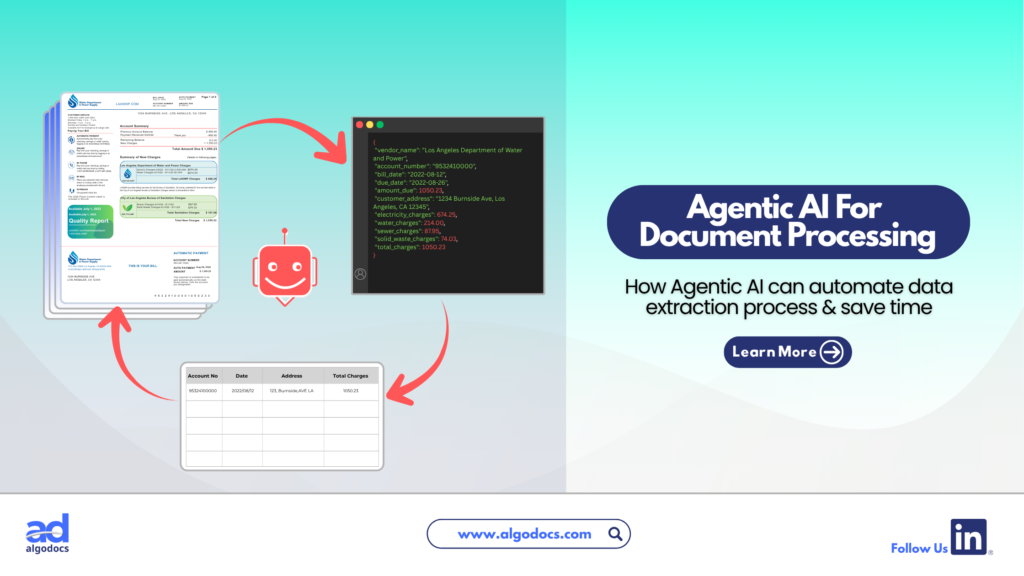
Back to Blog Table of contents On this page Agentic AI Document Processing: How To Automate Data Extraction Smartly With Agentic AI In 2026 Home › Blog › Algodocs › Agentic AI Document Processing: How To Automate Data Extraction Smartly With Agentic AI In 2026 Categories Algodocs Data Extraction Tags agentic ai ai platform for data extraction data extraction By Shubhankar Biswas Published June 26, 2026, 04:09 Updated July 10, 2026, 06:04 When it comes to extracting and processing data from documents, there is no match for sophisticated, computer-powered tools like an Intelligent Document Processing (IDP) tool. Even traditional methods like OCR are effective for basic data extraction. However, in the age of AI, information moves faster than ever and older technologies like OCR are quickly becoming outdated in the face of emerging AI data extraction tools. These modern tools handle all the data extraction work with little or no human intervention. We are talking about Agentic AI, the new standard for automating data extraction from documents compared to older methods. Let us explore exactly what Agentic AI document processing is, how it works, and why it matters for your business. What is Agentic AI? Agentic AI is an autonomous tool able to plan and execute specific tasks with little or no human intervention. Unlike standard AI tools that are only good at providing specific answers to questions, Agentic AI goes further. It can find answers, plan entire workflows according to set goals, follow instructions, manage, organize, and filter data efficiently. In simple terms, Agentic AI tools can plan and execute tasks to achieve goals with minimal human help. So how does Agentic AI work in the document processing and data extraction space? Let us explore. How Agentic AI Works in Document Processing Agentic AI in document processing works when you provide specific instructions to AI agents. These agents can perform tasks like image preprocessing, layout adjustments, data capturing, and data filtration. Large Language Models are only able to perform one task at a time, and you always need human intervention. Agentic AI can perform all these tasks by itself. It only requires a few instructions or goals in the beginning, and the Document Agentic AI tool takes care of the rest. One of the biggest differences between an LLM based data extraction approach and an Agentic AI based approach is autonomy. Agentic AI can perform tasks from start to finish, while LLM extraction is limited to single, specific tasks. Document Ingestion and Preprocessing: The AI agent automatically ingests files from emails, folders, or APIs. It enhances image quality, fixes skewed angles, and readies the file for reading. Layout and Context Analysis: Instead of just reading flat text, specialized vision agents look at the document structure. They map out tables, headers, signatures, and charts to understand the visual context. Semantic Data Extraction: Agents pull out the exact data you need, like an invoice total or patient ID. They do this by understanding the meaning of the words instead of just their location. Validation and Action: The agent cross checks the extracted data against your company databases to ensure accuracy. If everything is correct, it automatically pushes the data into your ERP or CRM system without a human pressing a button. Difference Between Agentic AI Data Extraction and LLM Based Extraction (IDP) To truly understand Agentic AI document processing, we need to see how it compares to older LLM based Intelligent Document Processing (IDP) systems. Key Features Agentic AI Based Data Extraction LLM Based Data Extraction (IDP) Autonomy Fully autonomous. Plans and executes end to end workflows. Requires human prompts and step by step guidance. Handling Complex Layouts Understands charts, nested tables, and complex formats easily. Struggles with anything outside of a standard text template. System Integration Can log into your ERP, check data, and trigger actions on its own. Usually extracts data into a file like a CSV and waits for a human. Exception Handling Reasons through errors and searches for context in past documents. Flags errors and stops the process until a human fixes it. Scale and Speed Multiple specialized AI agents work together as a team at the same time. A single model processes one task at a time sequentially. Benefits of Agentic AI Based Document Processing Traditional data extraction methods are slow and prone to errors. A business that processes over 10000 documents a day cannot rely on manual data extraction. Manual methods lack speed, contain human errors, lack automation, and require continuous monitoring. An Agentic AI document processing system changes the game entirely. Research indicates that Agentic AI could create nearly $450 billion in value for organizations by 2028. Here is why this technology is so beneficial: Zero Template Flexibility: Older OCR tools break if a vendor changes their invoice layout. Agentic AI document processing does not rely on rigid templates. Because it understands the meaning of the document, it can read a completely new layout perfectly on the first try. True Automation: Traditional systems extract data and drop it into a spreadsheet. Agentic AI takes action. If it reads an invoice, it can automatically log into your accounting software, match the invoice to a purchase order, and schedule the payment. Multi Modal Understanding: Today documents are messy. They contain text, handwritten notes, barcodes, and charts. Agentic systems use multiple specialized agents working together. One reads the text, another analyzes the charts, and another verifies the handwriting. Massive Cost Savings: By shifting from a human driven process to a fully autonomous AI workforce, businesses can scale up their document processing overnight without needing to hire more staff. Humans only step in to handle highly strategic decisions. How AlgoDocs Agentic AI Processes Documents and Data Extraction When looking at real world platforms, AlgoDocs is a powerful example of how modern data extraction works. AlgoDocs uses a blend of optical character recognition (OCR), machine learning, and advanced AI models to turn messy documents into structured, usable data. With Agentic AI document processing, AlgoDocs acts like a versatile
bill of lading, intelligent document processing, passport, PDF

Bank Statement Extraction: How To Revolutionize Financial Data Management with AlgoDocs AI

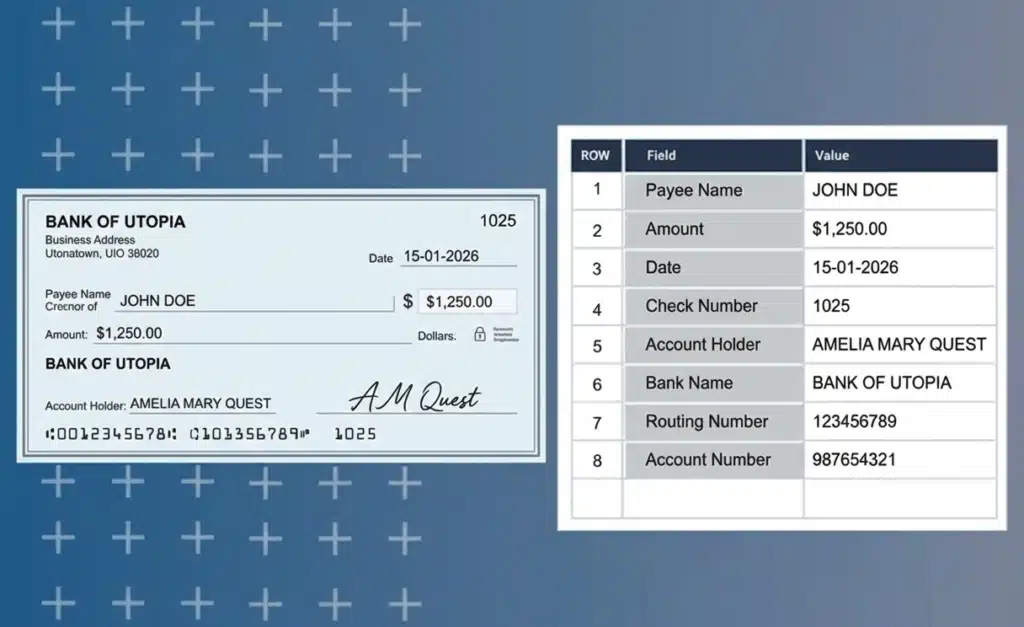
Back to Blog Table of contents On this page Bank Statement Extraction: How To Revolutionize Financial Data Management with AlgoDocs AI Home › Blog › bill of lading › Bank Statement Extraction: How To Revolutionize Financial Data Management with AlgoDocs AI Categories bill of lading intelligent document processing passport PDF Tags agentic ai Invoice Data Extraction passport data extraction pdf to text Purchase Order OCR By Ibrahim Nalbant Published December 31, 2024, 11:13 Updated June 25, 2025, 16:52 Introduction In today’s world, managing financial data quickly and accurately is very important. One task that takes a lot of time is bank statement extraction. Thanks to technology, especially Optical Character Recognition (OCR), and more advanced technology like Intelligent Document Processing (IDP) and AI, this job has become much easier. This blog will explain what bank statement extraction is, why it’s needed, the challenges it presents, and the best tools for the job. We’ll also discuss how AlgoDocs’ Intelligent Document Processing (IDP) tool can make extracting bank statement data easier and more convenient. What is a Bank Statement? A bank statement is a record of all the financial transactions that have occurred in a bank account over a specific period. These bank statements can be personal or corporate financial statements. They provide a detailed overview of all the deposits, withdrawals, and other activities that have impacted the account’s balance. This includes transactions like cash deposits and withdrawals, checks written and cleared, electronic transfers, ATM withdrawals, and even interest earned or fees charged. Essentially, it’s a comprehensive summary of the account’s financial activity, allowing account holders to track their spending, monitor their income, and identify any discrepancies or unauthorized transactions. What is Bank Statement Data Extraction? Bank statement data extraction means extracting data from bank statements. These bank statements can be in PDF files, Excel files, or scanned documents. In a bank statement or a standard financial document, you will find data such as transaction details, account balances, dates, amounts, account holder names, tax details, etc. If you want to extract data from a bank statement, you can either choose the manual data extraction method or pick an online financial data extraction tool to get the job done. However, manual data extraction takes a lot of time and is prone to errors, which can create more problems. That’s why businesses these days often use bank statement OCR to make data extraction easy and effective. Why Bank Statement Extraction is Needed Many businesses handle a large number of financial receipts, bank statements, and financial records as part of their daily operations. Extracting and organizing this vast amount of data can be a challenging task. Here are some key reasons why bank statement extraction is essential: Financial Analysis: Extracting data from bank statements allows businesses to understand their spending patterns, income sources, and overall financial activities. This analysis helps in making informed financial decisions, budgeting, and forecasting future financial needs. Bookkeeping and Accounting: Accurate data extraction simplifies the bookkeeping and accounting processes. By having organized and structured financial data, businesses can maintain accurate records and easily reconcile transactions, ensuring that their financial books are always up-to-date. Audit and Compliance: Extracting data from bank statements is crucial for meeting legal requirements and ensuring transparency in financial reporting. During audits, having organized data makes it easier to demonstrate compliance with financial regulations and standards, such as those set by tax authorities. Fraud Detection: Monitoring financial transactions through data extraction helps in detecting and preventing fraudulent activities. By analyzing bank statement data, businesses can identify suspicious patterns or unauthorized transactions, allowing them to take timely action to mitigate risks. Which Industries Require Bank Statement Extraction Many industries require efficient bank statement extraction, including: Banking and Finance: This industry relies heavily on bank statement extraction for monitoring transactions, processing loans, and managing accounts. Efficient data extraction helps in maintaining accurate records and ensuring compliance with financial regulations. Accounting Firms: Accounting firms use bank statement extraction to prepare financial statements and provide tax services. Accurate data extraction simplifies the accounting process, making it easier to maintain precise financial records and ensure timely tax compliance. Legal Firms: Legal firms need bank statement extraction for forensic accounting and legal support. Extracted data can be crucial in investigating financial discrepancies, supporting legal cases, and providing accurate financial evidence in court. Healthcare: The healthcare industry uses bank statement extraction for handling payments and processing insurance claims. Efficient data extraction helps in managing patient billing, ensuring accurate insurance claim processing, and maintaining financial transparency. E-commerce and Retail: E-commerce and retail businesses rely on bank statement extraction to manage cash flow and vendor payments. Extracted financial data helps in monitoring sales transactions, managing expenses, and ensuring timely payments to suppliers. Challenges with Manual Bank Statement Extraction Manually extracting data from bank statements has several problems: Time-Consuming: Entering data manually is time-consuming. Extracting data from each sheet of a bank statement requires significant time for analysis and capture, making the process even more cumbersome. Error-Prone: Human errors can lead to inaccurate records. Manual data extraction is prone to mistakes, as human eyes can’t always interpret everything correctly. This can result in serious consequences, such as data extraction errors, missed valuable data, and other issues. High Costs: Manual data extraction is costly because it requires employing more personnel to extract data from documents. This ultimately increases the operational costs for the company. Scalability Issues: With manual data extraction, you can’t adjust the number of personnel based on requirements. Therefore, scalability options with manual data extraction are very limited. Data Security: When your data is exposed to human intervention, there is a risk that it can be misused for illegal activities. Bank statement data is very sensitive, and exposure to the wrong hands can lead to serious trouble for individuals or organizations. What is a Bank Statement OCR? Optical Character Recognition (OCR) is a technology that converts various types of documents, such as scanned papers, PDFs, or images, into editable and searchable data. A bank statement OCR specifically

Scroll to Top