Algodocs

Author name: Shubhankar Biswas

Data Extraction, PDF

PDF Data Extraction: The Best Tool and Techniques

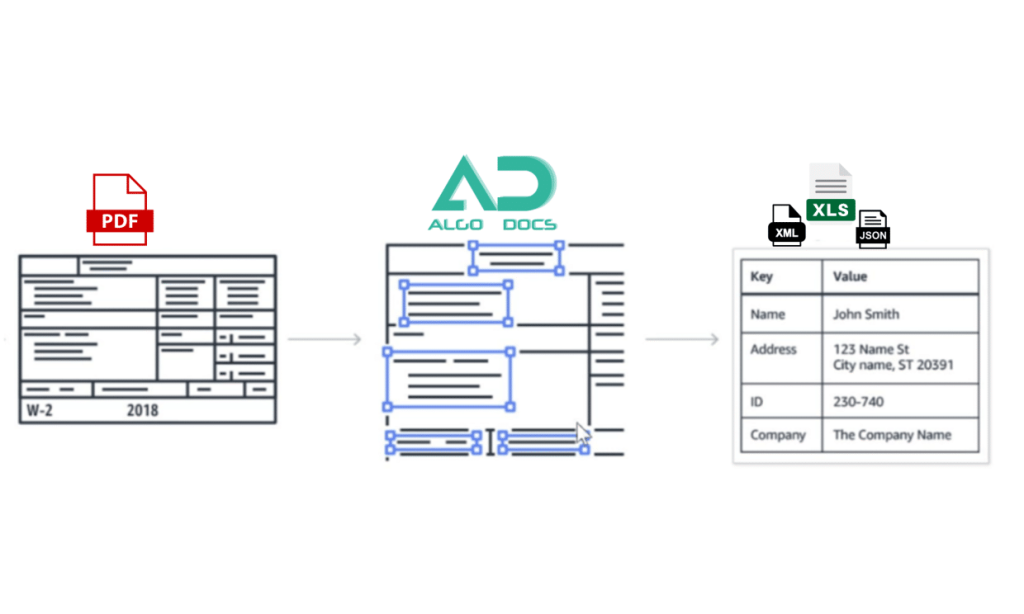
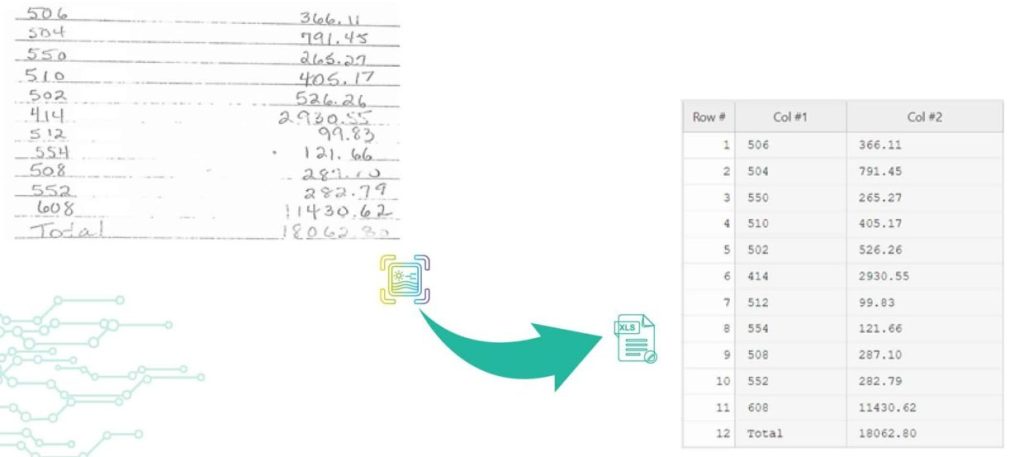
Back to Blog Table of contents On this page PDF Data Extraction: The Best Tool and Techniques Home › Blog › Data Extraction › PDF Data Extraction: The Best Tool and Techniques Categories Data Extraction PDF Tags ai powered tools algodocs convert handwritten to text data extraction digital transformation free online tools handwriting recognition handwritten pdf machine learning ocr technology pdf to text converter text recognition accuracy By Shubhankar Biswas Published October 13, 2025, 12:09 Updated July 21, 2026, 04:09 PDFs are ubiquitous in every organization, serving as the go-to format for sharing and exchanging business data. However, extracting, editing, or parsing data from these files can be a lot of work to do. In today’s data-driven world, efficiently extracting information from PDF documents is essential. This article talks about the problems with getting data from PDFs and shows how to extract data from PDFs to Excel online. Whether you need to get text, and tables, or make PDFs searchable, we’ll cover solutions that are fast, accurate, and easy to use. Challenges in PDF Data Extraction: Let’s explore some of the key challenges encountered in PDF data extraction, shedding light on why what may seem like a simple task can often become quite complex. Manual PDF text extraction requires meticulous attention to detail, making it a time-consuming endeavor. A slight error can lead to inefficiencies and potential errors. Human errors are common in manual extraction, potentially impacting the accuracy of the extracted data. Unlike other document formats like DOC, XLS, or CSV, editing PDF data is not straightforward, hindering customization according to specific requirements. Extracting data from tables in PDFs often results in the loss of original formatting, making it challenging to maintain data integrity. How to Extract Data from PDF Files in 2024: Extracting data from PDFs used to be a lot of work when the technology hadn’t advanced back in the days. However, now, with the advent of AI, OCR, and NLP, you don’t have to spend hours on manually extracting the data. All you need is an efficient tool like Algodocs that does the job for you accurately and easily. Let’s look at different PDF data extraction methods in 2024: Do it Manually While not the preferred method in 2024, manual data extraction remains a necessity for startups or beginners who are not ready to invest in good PDF data extraction software or are new to technology. Whether handling school documents, business reports, medical records, or any other file type, manual extraction is still widely utilized, although it is considered a less refined approach. Use Adobe Acrobat For more professional-grade PDF page extraction, Adobe Acrobat is a solid option. Although it’s not free, you can try it out with a 7-day free trial. Adobe Acrobat offers various plans, with Acrobat Pro starting at $19.99/month. This plan includes a range of features to streamline your document management process. Adobe Acrobat retains all interactive components of the PDF, including hyperlinks, comments, and forms. It allows you to extract any number of pages and save them as separate files or split the PDF into multiple PDFs, but all at a cost. You wouldn’t think it’s free, right? While Adobe Acrobat is a well-established tool for working with PDFs, it lacks the advanced data extraction capabilities of automated data extraction tools like Algodocs. Such a tool utilizes the latest technology to extract a wide range of information from PDFs and images, including handwriting, tables, and key-value pairs. This extracted data can then be exported into usable formats like CSV or Excel, making it ideal for integrating with accounting software or further analysis. In contrast, Adobe Acrobat offers limited data extraction functionalities. Automate Data Extraction with AI-powered OCR Technology What if you need to extract pages based on their content? Consider a scenario where you need to extract and analyze all invoices or pages containing specific key values such as names, dates, emails, total, address, etc. In such cases, an AI-powered OCR (Optical Character Recognition) tool can be invaluable. One important and powerful tool is Algodocs which we’re going to discuss in detail later in the article. It is the easiest way to get data from PDFs to Excel. Automated PDF Data Extraction: Algodocs Experience the power of Algodocs, an innovative AI data extraction platform designed to streamline your document processing workflow. With Algodocs, you can effortlessly extract valuable information from scanned files, including images, PDFs, Word, and Excel files. Whether these are HR forms, bank statements, purchase lists, or sales invoices, Algodocs handles them all with high accuracy. Gone are the days of manual data extraction. Algodocs empowers you to access and extract editable data effortlessly. Now get rid of the tedious tasks and say hello to editable formats like Excel, JSON, and XML, and seamless integrations with other software such as accounting or databases. Best of all, Algodocs offers a forever free subscription plan, allowing you to process up to 50 pages per month without any cost, so you can extract data from PDFs for free! Key Features of Algodocs PDF Extraction: Algodocs automates the extraction of tables from scanned files, including handwritten tables and those spanning multiple pages. The advanced AI-powered OCR engine can handle low-quality scanned PDFs and images at as low as 75 dpi. Using Intelligent Character Recognition (ICR) functions, Algodocs can extract handwritten text and convert it into machine-printed text. Algodocs can extract data, fields, and tables from native and scanned documents and save them as Excel, JSON, or XML files. Get Started in Minutes: The screencast video below shows how to quickly convert PDF files and photos into editable formats like Microsoft Word, Excel, PowerPoint, Text, or RTF. Moreover, a summary of the steps required for transforming a PDF into an editable Excel file is provided below. Convert PDF files and images into editable files in less than a minute. Step 1: Log in to your Algodocs account. Step 2: From the Dashboard, click on the File Manager tab  Step 3: Right-click on the root , and a drop-down menu will pop up showing available options

Data Extraction, PDF

What is a PDF Parser?

Back to Blog Table of contents On this page What is a PDF Parser? Home › Blog › Data Extraction › What is a PDF Parser? Categories Data Extraction PDF Tags ai platform for data extraction algodocs character recognition data extraction from images deep learning export extracted data to excel invoice process machine learning ocr api web-based ai platform for data extraction By Shubhankar Biswas Published October 13, 2025, 12:03 Updated July 29, 2026, 02:32 A PDF Parser is a program or a library that enables end-users and organizations to parse data from native PDF documents. Often, organizations need to parse PDF documents for specific fields such as Account Number, Date, Address, Bill to/from information, or parse tabular data. PDF Parsers are usually needed and used for processing and parsing data from large amounts of documents. On the other hand, when you have a handful of documents you simply go and copy the data you need from PDF documents manually and paste it to Excel or anywhere you need it to be. PDF Parsers enable end-users to get data from hundreds and thousands of PDF documents in real time by saving huge amounts of time and, thus, money. Parsing pdf documents isn’t an easy task. There are various ways native pdf documents are generated and parsing data from such pdf documents requires smart approaches. Parsed data from PDF documents greatly varies depending on the industry, which means the data parsed might also greatly change, which complicates the task. Parsing PDF medical forms, which contain specific fields such as First, Middle, and Last names, Sex, Date of Birth, etc. are very different from PDF purchase orders that contain mainly the items in the tabular form with such columns as Item No, Code, Quantity, Item Price, Amount, etc. Therefore, if PDF Parser produces just a bunch of text from a PDF document it does not make much sense for the end-user. What end-users or organizations require is the structured data parsed from PDF documents. In other words, PDF Parser should extract from PDF documents only the data the end-user needs and in the right structured format. For this, the PDF Parser must be smart and flexible enough to parse PDF documents with various layouts and data types. How to parse PDF documents with various layouts? Algodocs allows you to parse PDF documents of any complexity in their layouts and type of data. With the flexible extracting rules of Algodocs, you can parse data from PDFs with different layouts. It is very easy and quick to set up extractors in Algodocs for your PDF documents. We provide 100% free technical support and are ready to set up extractors for you. While we provide free support for creating extracting rules, you may check our help and support section if you wish to learn how to create extracting rules in Algodocs. Watch the following introductory video to get an idea of how it works in Algodocs. Feel free to start a free subscription right now and parse your pdf documents. You can use Algodocs free forever with 50 pages per month. If you need to process a higher number of pages, then please see our affordable pricing plans. If you have specific requirements and need a custom solution, please contact us. You Might Also Like PDF Data Extraction: The Best Tool and Techniques PDFs are ubiquitous in every organization, serving as the go-to format for sharing and exchanging business data. However, extracting, editing, or… Shubhankar Biswas October 13, 2025 PDF Image Extraction: A Comprehensive Guide To Extracting Image Data From Scanned Pdf Files In 2025 PDF image extraction is a challenging process. Without proper tools and technology, this process can be tedious and prone to errors, which can… Shubhankar Biswas September 1, 2025 Convert PDF to JSON – Convert PDF Documents to Structured JSON Objects Table of Contents Introduction Organizations in various industries widely use PDF documents, since no doubt PDF is a common document format for… Shubhankar Biswas October 13, 2025 Start extracting your data today No credit card required. Process up to 50 pages per month on the Forever Free plan. Book a Demo Get Started for Free

Image Data Extraction

A Guide on Extracting Tables From Low-Quality Scanned Documents

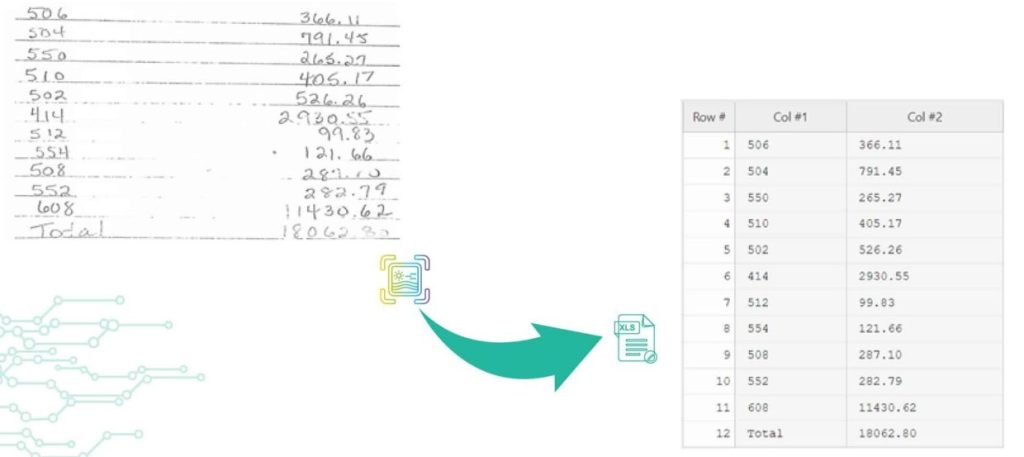
Back to Blog Table of contents On this page A Guide on Extracting Tables From Low-Quality Scanned Documents Home › Blog › Image Data Extraction › A Guide on Extracting Tables From Low-Quality Scanned Documents Categories Image Data Extraction Tags ai platform for data extraction algodocs character recognition data extraction from images deep learning export extracted data to excel invoice process machine learning ocr api web-based ai platform for data extraction By Shubhankar Biswas Published October 13, 2025, 11:52 Updated July 22, 2026, 09:54 Many companies deal with thousands of documents every month. Document workflow automation becomes vital for such companies as the number of documents increases. One of the most frequent and at the same time tedious operations when processing documents is reading data from tables, especially when documents are scanned PDFs or images. Automating table extraction from scanned documents and exporting them into Excel or JSON within seconds is a dream for every company dealing with manual data entry. Automating table data extraction from scanned documents and images reduces operational costs and saves a lot of time. In this article, we will talk about table extraction from scanned documents or images with low quality. You, most probably, came across some online tools that can extract tabular data from documents. However, there are a few that really work with low-quality scanned documents or images taken by a mobile device. Optical Character Recognition (OCR) is the technology used for converting scanned images into text. However, standard OCR tools require you to apply certain image processing operations on the images before you can apply OCR on them. Without manual pre-processing, OCR will fail in most cases, and accuracy will be low. Unfortunately, even with pre-processing operations free OCR tools produce poor performance. How to extract tables from scanned PDFs and images with low quality? Algodocs has an advanced AI-powered OCR engine that automatically handles any type of scanned PDF or image with a low quality. Algodocs accepts either colorful scanned images, black and white, or any other settings and extracts data with high accuracy. Algodocs can process scanned images with as low a dpi as 75. If you have scanned PDFs or images with low quality, then Algodocs is the right solution for you. You may start a free subscription right now and test your own scanned documents since we offer a free subscription (forever) with 50 pages per month. If you need to process a higher number of pages, then please see our affordable pricing plans. Please read our article on the basic steps for table extraction from documents here: Extract tables from PDF and scanned documents Algodocs: the best software tool to extract tables from scanned PDFs and images Consider the portions of the scanned documents below and the tables that Algodocs extracted from them. Example #1 Sample scanned image with low-quality (black and white) Extracted table by Algodocs. Example #2 Extracted table by Algodocs As you can see, the accuracy of Algodocs is perfect even with low-quality scans. However, there are cases when scanned images may cause Algodocs to make mistakes concerning small characters such as punctuation or other symbols (points, commas, date separators, etc.). Let’s have a look at the example below with a scanned image and see what Algodocs could extract from it. The extracted table from the above-scanned image is shown below. As you can see, there are numbers that are extracted with wrong decimal separators (indicated in red circles), i.e. a decimal point is mistakenly recognized as a comma. This is due to the dark background that some rows have on the image. With the help of flexible extracting rules of Algodocs, the workaround is quick and simple. Whenever you have low-quality scanned PDFs of images, we always advise you to follow the steps explained below. Step1. Remove all points and commas from the numbers We apply the ‘Search & Replace’ filter in Algodocs by using regular expressions as the search type. We apply this rule to all the columns in the example below, but you can restrict this rule to a specific column when needed. In order to find all dots or commas we use .|, as the search term and we leave empty the second field (replace by this), since we simply want to remove them. Step 2. Convert all numbers to their previous format Since we removed all points and commas from numbers, they actually increased, i.e. multiplied by 100 we can say (2,378.63 became 237863). Therefore, since we know that our numbers had 2 decimal places, we can divide all numbers by 100 to get the original numbers. The ‘Arithmetic Operation’ filter helps us implement exactly this. We divide numbers by 100 in the last column as shown in the example below. You may apply this filter to other columns too. That’s it. We got numbers in their original form with 100% accuracy! The same approach can be applied to other symbols when you have documents with a low quality. Please, contact us if you need any assistance. You Might Also Like How to Extract Handwritten Data from PDFs with Algodocs? Table of Contents Want to learn how to extract handwritten data from PDFs easily for your business documents? Algodocs is a powerful AI platform… Shubhankar Biswas October 13, 2025 Data Extraction for Legal Industry : How Intelligent Document Processing (IDP) Can Transform Legal Industry Document Workflow The global law and legal services industry is expected to reach $1,591.56 billion by the end of 2032, according to a report. The legal industry… Shubhankar Biswas October 12, 2025 Extract Tables from Images with AlgoDocs Extract Tables from Images with AlgoDocs One might find themselves overwhelmed by a deluge of paperwork—orders, checks, articles—all containing… Ibrahim Nalbant June 20, 2024 Start extracting your data today No credit card required. Process up to 50 pages per month on the Forever Free plan. Book a Demo Get Started for Free

Artificial Intelligence, Data Extraction

AI Data Extraction Checklist: Transform Business with Algodocs

Back to Blog Table of contents On this page AI Data Extraction Checklist: Transform Business with Algodocs Home › Blog › Artificial Intelligence › AI Data Extraction Checklist: Transform Business with Algodocs Categories Artificial Intelligence Data Extraction Tags bank ocr deep learning digital transformation Finance ocr invoice invoice process KYC loan forms packing list ocr pdf to text sea waybill ocr web-based ai platform for data extraction By Shubhankar Biswas Published October 13, 2025, 09:25 Updated July 23, 2026, 07:33 What is AI Data Extraction? Let’s discuss data – a lot of data. Modern-day businesses are losing themselves in the sea of information. Whether it is an invoice, a contract, a weekly report, or a form, paper documents are still part of everyday life. Extracting data from such documents is a tedious, repetitive, and painful process if done manually. This is where AI data extraction comes to the rescue. It is a game-changer for anyone who has to work with several papers. Incorporating AI means data entry activities are done efficiently and there’s an increase in the accuracy and productivity of your business. Algodocs is a perfect example of an AI data extraction tool. Why? Let’s find out. Understanding Your Data: The Foundation for Successful AI Data Extraction Before you set loose the AI on your documents, I thought it’s best to discuss a little about your data. It is essential to know what type of data you are going to extract and what the process is going to be like. Identify Your Data Sources First things first: where do you store your data? The first action plan is to identify this source. Is it hidden in files and papers or dispersed in different online sites as in virtual archives? You’ll find your data in various forms: Manual records or documents that include invoices, contracts, and reports, among others. Documents in PDF files, Word documents, Excel, images, and many others. Databases that store many formats of data about any department in an organization. Assessing Data Quality Data quality is super essential for accuracy in the extraction process. Ensure that you go through your assembled data to determine whether it meets the standard of completeness, consistency, and accuracy. Check that all required data items are included. Check whether the formats, units of measurement, and terms used for data are consistent. Validating steps where errors, inconsistencies, or outliers will affect the outcome must be adopted diligently. Dedicating time to data preparation will enable laying down the key fundamentals of an AI data extraction project. Optimizing the extraction results of Algodocs, the company provides you with tools for evaluating data quality and detecting potential problems. Choosing the Right AI Data Extraction Tool Picking the right tool to extract AI data is critical to the success of any AI project. As we have seen, there are numerous strategies out there; that is why it is crucial to define your requirements precisely and compare tools based on the crucial factors. Critical Considerations for Tool Selection Accuracy: The whole idea of training an AI in the first place is to increase accuracy, isn’t it? Search for the tool with favorable accuracy characteristics, especially in the case of processing intricate and diversely formatted documents. Don’t forget about tables, crazy handwriting, or low-quality pictures. Speed: It’s important, especially in dealing with large numbers of documents that are prevalent in the modern organization. However, time translates to costs, more so when handling big data at hand or any other business. Having a fast and efficient tool can save hours, if not days off of your time. Flexibility is very important, especially for those industries that anticipate expansion. Scalability: The tool should be designed for growth which includes a higher amount of input data and scalability of business over time. Document Types: Think about the countless supported document types with your tool (PDFs, images, Word, Excel, and more). Data Formats: Verify that the tool can export information according to your preferred choice format (CSV, XML, JSON, etc.). Integrations: This is very important as technology should be compatible with the current systems and applications. In other words, a single tool could essentially serve the purpose. But if a tool can integrate with other existing systems, then that’s ideal. It integrates with frequently used business applications such as CRMs, ERPs, and data warehouses. Pricing: Analyze cost distribution for various pricing structures considering your estimated budget. Customer Support: Customer support should be reliable and available for providing technical support and answering questions at all times. Types of AI Data Extraction Tools Cloud-Based Tools AI data extraction in cloud-based is also beneficial since it is scalable, easily accessible, and mostly cheaper. These tools are stored at service providers’ central servers, and users only need an Internet connection to use them. Examples: Google Cloud Document AI, Amazon Textract, ABBYY Cloud OCR, and Algodocs. On-Premise Tools On-premise solutions allow necessary control over infrastructure, but they can be more expensive. These tools are deployed and run on the organization’s own IT systems and infrastructure. It is worth mentioning that Algodocs is a web-based tool; however, it can also be used On-premise. Examples: Kofax, OpenText, and Algodocs. Open-Source Tools Using and adapting open-source AI data extraction tools is more flexible and customizable, but implementing these tools requires technical skills. Examples: Tesseract OCR, OpenCV Mobile Apps Mobile applications usually reside on document capture and basic data mining capabilities. This is perfect for small data snippets or impromptu snapshots of information gathering. However, such tools may not work well when a large quantity of structured content, such as tables, is involved. Not to forget that handwriting style and layout complexities can cause the accuracy of such tools to drop. Examples: Google Lens or Microsoft Office Lens can scan your document and convert the text into a digital format. Making an Informed Decision Considering the following aspects and your organization’s requirements, you can choose the right AI data extraction tool for your organization. Feature Cloud-Based On-Premise Open-Source Mobile Apps Accuracy High High Varies Varies Speed High High Varies

insurance data extraction
Data Extraction, Insurance Data Extraction

Insurance Data Extraction: Automating Policy and Claim Processing with AI

Back to Blog Table of contents On this page Insurance Data Extraction: Automating Policy and Claim Processing with AI Home › Blog › Data Extraction › Insurance Data Extraction: Automating Policy and Claim Processing with AI Categories Data Extraction Insurance Data Extraction Tags ai platform for data extraction algodocs character recognition deep learning IDP Insurances Data Extraction intelligent document processing By Shubhankar Biswas Published October 12, 2025, 18:20 Updated July 23, 2026, 05:31 The modern insurance sector operates on massive volumes of information and insurance data extraction is a crucial part of insurance industry business process. Every single day, insurance carriers, third-party administrators, brokers, and agencies process thousands of files. These files range from policy applications and loss notices to medical bills, repair estimates, legal notices, and property appraisal reports. Within this ocean of paperwork lies the essential information required to underwrite risks, calculate premiums, settle claims, detect fraud, and maintain regulatory compliance. However, a significant challenge facing the insurance industry today is that up to eighty percent of this critical information arrives in unstructured or semi-structured formats. Scanned PDF files, digital images, physical paper forms, email attachments, and handwritten adjuster notes cannot be directly read or processed by traditional enterprise databases. Historically, companies relied heavily on manual data entry to transfer details from incoming documents into core operational platforms like claims management systems or policy administration suites. Manual processing creates severe bottlenecks. It inflates operational expenses, slows down service delivery, introduces human error, and frustrates policyholders who expect immediate digital service. To overcome these challenges, progressive insurance providers are transitioning toward automated insurance data extraction. Driven by advances in AI OCR, Machine Learning, and Intelligent Document Processing, modern extraction tools allow organizations to transform messy, unformatted files into structured, machine-readable digital data in seconds. This comprehensive guide explores the fundamentals of automated insurance data extraction, examining the types of documents processed, the hidden costs of manual workflows, the business benefits of artificial intelligence, and the leading software solutions shaping the market. What is Insurance Data Extraction? Insurance data extraction is the automated technology process of reading, identifying, capturing, and converting information from paper or digital insurance records into structured digital data formats. Instead of requiring human workers to manually read documents and type values into software screens, an automated insurance data extraction workflow ingests files, interprets their contents, extracts specific data fields, and exports clean data directly into core databases or enterprise applications. The insurance data extraction workflow relies on an integrated stack of advanced technologies: Document Ingestion: The system collects inbound files from multiple channels, including email inboxes, mobile application uploads, scanned physical mail, cloud storage, or secure web portals. Optical Character Recognition (OCR) and AI OCR: Legacy OCR converts scanned document images into text strings. Next generation AI OCR goes further by recognizing complex handwriting, low-resolution scans, and non-standard typography. Intelligent Document Processing (IDP): Combining artificial intelligence with natural language processing, Intelligent Document Processing understands the context and semantic meaning of words. It recognizes that a dollar figure located next to the word deductible represents a specific financial field rather than a premium payment. Machine Learning and Field Validation: Machine learning algorithms continuously improve extraction accuracy over time. Automated validation rules cross check extracted policy numbers, dates, and mathematical totals against internal enterprise databases to verify accuracy. Data Export: Clean, structured data is formatted into structured payloads such as JSON, XML, or CSV, and delivered directly to core policy or claims platforms via APIs. Through AI insurance data extraction, carriers can automate repetitive administrative steps, reduce turnaround times, and establish seamless insurance workflow automation across every department. Types of Documents Used in Insurance Industry for Insurance Data Extraction Insurance carriers handle a vast assortment of forms, reports, and contracts. Each document type possesses unique layouts, terminology, and data extraction requirements. Automated insurance document processing systems are designed to process diverse document types efficiently. 1. Policy Documents and Applications Policy applications and insurance binders represent the foundational agreements between policyholders and carriers. Extracting accurate data during policy origination is crucial for setting terms and issuing coverage. Key documents include: ACORD 125 Applications: The standard commercial insurance application form containing applicant business details, policy effective dates, location details, and requested coverage limits. Policy Schedules and Declarations Pages: Summary pages detailing coverage types, policy numbers, named insureds, endorsement listings, and premium amounts. Endorsement Forms: Amendments to existing policy contracts that modify coverage terms, add new insured assets, or change liability limits. Accurate policy data extraction ensures that customer profiles, coverage clauses, and premium figures match internal records without requiring manual entry. 2. Insurance Claims and Loss Notices When policyholders suffer a loss, rapid claims intake is essential for customer satisfaction. Automated insurance claims data extraction parses critical details from early claims documentation: First Notice of Loss (FNOL) Reports: Initial notifications submitted by policyholders or agents detailing how, when, and where an incident occurred. ACORD Loss Notices: Standardized notices such as the ACORD 2 Automobile Loss Notice or ACORD 3 Property Loss Notice, capturing policy details, driver information, and loss descriptions. Incident and Police Reports: Official law enforcement collision records containing narrative descriptions, driver statements, weather conditions, and citations. Automating insurance claims data extraction accelerates claim registration, enabling immediate assignment to claims adjusters or automated decisioning engines. 3. Medical Records and Healthcare Billing Forms Health, workers compensation, and personal injury protection claims involve complex clinical and billing records. These documents combine typed text, medical terminology, complex codes, and handwritten notes: CMS-1500 and UB-04 Forms: Standard medical billing claim forms used by physicians, medical practices, and institutional healthcare providers. Explanation of Benefits (EOB): Statements sent by health plans explaining covered services, approved amounts, deductible applications, and patient responsibility. Clinical Discharge Summaries and Doctor Notes: Narrative medical charts containing diagnoses, treatment histories, and surgical notes. Automated extraction engines capture critical diagnostic codes such as ICD-10, procedure codes such as CPT, billing line items, and provider identification numbers to streamline health claims auditing. 4. Underwriting Documents and Financial Statements Underwriters must review complex

Data Extraction, Image Data Extraction, Legal Document Extraction

Data Extraction for Legal Industry : How Intelligent Document Processing (IDP) Can Transform Legal Industry Document Workflow

Back to Blog Table of contents On this page Data Extraction for Legal Industry : How Intelligent Document Processing (IDP) Can Transform Legal Industry Document Workflow Home › Blog › Data Extraction › Data Extraction for Legal Industry : How Intelligent Document Processing (IDP) Can Transform Legal Industry Document Workflow Categories Data Extraction Image Data Extraction Legal Document Extraction Tags AI algodocs data extraction IDP intelligent document processing Legal Industry machine learning By Shubhankar Biswas Published October 12, 2025, 16:36 Updated July 22, 2026, 10:08 The global law and legal services industry is expected to reach $1,591.56 billion by the end of 2032, according to a report. The legal industry primarily relies on information, with activities such as contracts, court filings, discovery documents, and legal research forming the foundation of every case and legal process. These tasks involve a significant amount of documentation and data. However, managing this mountain of data has always been a challenge for the legal industry. Traditional methods of manual review and data entry are time-consuming, expensive, and prone to human error. Fortunately, technologies such as Artificial Intelligence (AI) and Intelligent Document Processing (IDP) have revolutionized how law firms and legal departments handle data extraction from multiple documents and files, significantly improving their work efficiency. In this blog, we will discuss how IDP (Intelligent Document Processing) can enhance document processing efficiency for the legal industry and why Algodocs AI is an ideal document processing solution that can elevate data extraction and document management for legal service business owners. Data Extraction for Legal Industry : A Major Challenge for Law Firms and Legal Service Providers Data is the lifeblood of the legal profession and law firms. Whether it involves extracting key clauses from contracts, identifying vital information in discovery documents, or analyzing legal precedents, the ability to quickly and accurately extract data is critical. This is where IDP (Intelligent Document Processing) for the legal industry comes into play. IDP automates the process of identifying and extracting relevant information from various legal documents, transforming unstructured data into a structured, usable format. This process is vital for several reasons: Efficiency: Manual data extraction is notoriously slow and labor-intensive. IDP and AI automate this process, freeing legal professionals to focus on higher-value tasks like strategy and client interaction. Accuracy: Human error is inevitable when manually extracting data. IDP and AI solutions, such as Algodocs, significantly reduce errors, ensuring data integrity and reliability. Cost Savings: Manual data extraction is not cost-effective, especially when dealing with bulk documents, which are abundant in the legal industry. By automating data extraction, law firms and legal departments can reduce overhead costs and improve their bottom line. Improved Decision-Making: Extracted data can be analyzed to provide valuable insights, enabling lawyers to make more informed decisions and develop stronger legal strategies. The Limitations of Traditional Data Extraction Methods Before the advent of technologies like IDP, AI, or OCR, legal professionals relied heavily on manual methods for data extraction. These methods, while sometimes necessary, come with significant challenges: Time-Consuming: Sifting through hundreds or thousands of pages of legal documents to locate and extract specific information is tedious and time-intensive. Error-Prone: Manual data entry is susceptible to human error, which can have severe consequences in legal matters. Inconsistent: Manually extracted data can vary in format and accuracy depending on the individual performing the task, leading to inconsistencies and difficulties in analysis. Costly: Labor costs associated with manual data extraction can be significant, particularly for large-scale legal projects. These limitations highlight the need for a more efficient, accurate, and cost-effective solution for data extraction in the legal industry. This is where IDP steps in. How IDP Works IDP leverages the power of artificial intelligence (AI) technologies such as machine learning (ML), natural language processing (NLP), computer vision, and OCR to automate data extraction from legal documents. Here’s how it works: Document Ingestion: IDP solutions can ingest various document formats, including PDFs, scanned images, Word documents, handwritten notes, and emails. Pre-Processing: Documents undergo pre-processing steps like optical character recognition (OCR) to convert scanned images into machine-readable text and remove noise. Data Extraction: NLP and ML algorithms identify and extract relevant information based on pre-defined rules or learned patterns, such as clauses, dates, names, addresses, and financial figures. Data Validation: Extracted data is validated using techniques like cross-referencing and pattern matching to ensure accuracy. Output: The validated data is exported into a structured format, such as a spreadsheet or database, for easy analysis and use. The Benefits of IDP for Legal Data Extraction IDP offers numerous benefits for legal professionals seeking to streamline data extraction: Increased Efficiency: Automates the data extraction process, significantly reducing time and effort. Improved Accuracy: Minimizes human intervention, reducing errors and ensuring greater precision. Enhanced Consistency: Provides consistent data extraction across all documents, regardless of complexity. Reduced Costs: Cuts labor costs by automating repetitive tasks. Better Risk Management: Identifies potential risks and liabilities within documents. Improved Compliance: Ensures adherence to legal and regulatory requirements. Enhanced Client Service: Enables legal professionals to deliver faster, more accurate services. Use Cases of IDP in the Legal Industry Contract Analysis: Automatically extracts key details like parties, dates, payment terms, and clauses. Due Diligence: Speeds up the review process for mergers and acquisitions by analyzing contracts and financial statements. Discovery: Analyzes vast amounts of discovery data to identify relevant information and patterns. Legal Research: Automatically extracts relevant information from case law, statutes, and legal journals. Compliance Monitoring: Ensures documents adhere to regulations and internal policies. Choosing the Right IDP Solution To maximize its benefits, selecting the right IDP solution is crucial. Consider factors such as accuracy, scalability, integration, security, user-friendliness, and vendor support when making your choice. Algodocs: A Leading IDP Solution for Legal Industry Algodocs is a powerful IDP solution tailored to address the challenges of data extraction in the legal field. It automates document processing, ensures high accuracy, offers customizable data extraction, and integrates seamlessly with existing systems. By implementing Algodocs, law firms and legal departments can enhance efficiency, accuracy, and cost-effectiveness, enabling better outcomes for clients. Conclusion Intelligent Document Processing is transforming the legal industry by automating critical processes. By improving efficiency, accuracy, and cost-effectiveness, IDP empowers law firms and legal departments to

Healthcare

Healthcare Data Extraction: Improving Healthcare Document Workflow with AI and IDP In 2025: A Case Study

Back to Blog Table of contents On this page Healthcare Data Extraction: Improving Healthcare Document Workflow with AI and IDP In 2025: A Case Study Home › Blog › Healthcare › Healthcare Data Extraction: Improving Healthcare Document Workflow with AI and IDP In 2025: A Case Study Categories Healthcare Tags algodocs data extraction deep learning healthcare intelligent document processing machine learning ocr api By Shubhankar Biswas Published October 12, 2025, 16:30 Updated July 20, 2026, 10:11 Healthcare data extraction has always been a challenge for hospitals, healthcare providers, and insurance companies. Extracting data from multiple documents was a complex task. However, the advent of AI and Intelligent Document Processing (IDP) technologies has significantly impacted how the healthcare industry processes data from various healthcare documents. The healthcare industry is a vast sea of data. Every patient interaction, medical procedure, and insurance claim relies on information. This data, locked within various document formats, holds immense potential to improve patient care, streamline healthcare operations, and drive innovation. However, extracting this valuable information from diverse healthcare documents has traditionally been laborious, error-prone, costly, and inefficient. This is where technologies like IDP, AI, Machine Learning (ML), Large Language Models (LLM), and Optical Character Recognition (OCR) come into play. With these innovative technologies, we have improved data extraction for the healthcare industry. According to a recent report, the healthcare industry is a USD 5,862.1 billion industry and is expected to reach USD 9,245.8 billion by 2033. Another report by Deloitte suggests that AI technologies can save USD 360 billion in costs in the USA by next year. The healthcare industry generated up to 2.3 zettabytes of data worldwide in 2020. In this blog, we will discuss how AI is changing data extraction for the healthcare industry across the globe and the technologies and tools behind this technological advancement. The Diverse Landscape of Healthcare Documents The healthcare industry is inundated with various documents, each containing critical information crucial for patient care, administration, and research. Understanding these documents is the first step in effectively leveraging data extraction. Let’s delve into the key document types: Medical Bills Medical bills are more than just invoices; they are detailed records of services rendered to a patient. They contain crucial information, including: Patient Demographics: First Name, Last Name, address, date of birth, insurance, and other crucial details. Provider Information: Name, address, National Provider Identifier (NPI), etc. Service Details: Procedure codes (CPT/HCPCS), diagnosis codes (ICD-10), dates of service, quantities, and descriptions. Charges and Payments: Itemized charges, adjustments, insurance payments, patient responsibility, payment methods, tax details, etc. Efficiently extracting data from medical bills is vital for revenue cycle management, claims processing, cost analysis, and identifying trends in healthcare spending. Accurate data extraction ensures timely reimbursements, reduces claim denials, and provides insights into cost-effective care delivery. Handwritten Bills Despite the growing adoption of Electronic Health Records (EHRs), handwritten bills persist in many healthcare settings, particularly in smaller practices or during field visits. Many developing Asian countries, as well as developed countries, still rely on handwritten bills. These bills often contain information such as: Patient Information: Basic details like first name, last name, sometimes age or contact information, dates, etc. Treatment Details: Brief descriptions of services provided, often in abbreviated form. Charges: Handwritten amounts for each service or an overall total. Extracting data from handwritten bills presents a unique challenge due to variations in handwriting styles, abbreviations, and the potential for smudges or illegible entries. Advanced OCR coupled with Natural Language Processing (NLP) is essential for accurate data extraction from these documents. Patient Forms Patient forms are the cornerstone of patient intake and data collection. They gather essential information that forms the basis of a patient’s medical record. Sometimes these forms are filled with handwritten data, which presents a challenge for data extraction. Though the majority of patient forms are computer-generated, in many cases, they are handwritten. Common types of patient forms include: Registration Forms: Collect basic demographics, insurance information, and emergency contacts. Medical History Forms: Document past illnesses, surgeries, allergies, medications, and family history. Consent Forms: Obtain patient authorization for treatment, procedures, or release of information. HIPAA Forms: Ensure compliance with the Health Insurance Portability and Accountability Act regarding patient privacy. These forms often contain valuable information such as first name, last name, address, body weight, blood group details, current health issues, and previous diagnoses. They often contain a mix of structured (checkboxes, multiple-choice) and unstructured (free-text) data. Effective data extraction from these forms relies on advanced form recognition and NLP techniques to capture both types of information accurately. Health Insurance Documents Health insurance documents, including Explanation of Benefits (EOBs) and insurance cards, are crucial for understanding a patient’s coverage, verifying eligibility, and processing claims. They contain: Insurance Cards: Provide member ID, group number, plan type, contact details, and other information. Explanation of Benefits (EOBs): Detail how a claim was processed, including allowed amounts, co-pays, deductibles, and reasons for any denials. Data extraction from insurance documents enables accurate billing, reduces claim rejections, and helps patients understand their financial responsibilities. It also provides valuable data for insurance companies to analyze utilization patterns and manage risk. Other Vital Documents Beyond these core document types; the healthcare ecosystem encompasses a multitude of other documents: Lab Reports: Contain results of diagnostic tests, including blood work, imaging, and pathology reports. Prescription Forms: Detail medication name, dosage, frequency, and refill information. Referral Forms: Facilitate specialist consultations and continuity of care. Discharge Summaries: Provide a comprehensive overview of a patient’s hospital stay, including diagnosis, treatment, and follow-up instructions. Clinical Notes: Document physician observations, assessments, and treatment plans. Each document plays a unique role in patient care and administration. This diverse range provides a holistic view of a patient’s journey, enabling better care coordination, research, and population health management. How AI, ML, and IDP Leverage Healthcare Data Extraction The traditional approach to extracting data from these diverse healthcare documents has been manual data entry, a process fraught with challenges. However, the emergence of AI, ML, and IDP has revolutionized data extraction, offering a more efficient, accurate, and scalable solution. Try Algodocs AI data extraction platform to extract data from variou types of documents. Sign up

Data Extraction, PDF

PDF Image Extraction: A Comprehensive Guide To Extracting Image Data From Scanned Pdf Files In 2025

Back to Blog Table of contents On this page PDF Image Extraction: A Comprehensive Guide To Extracting Image Data From Scanned Pdf Files In 2025 Home › Blog › Data Extraction › PDF Image Extraction: A Comprehensive Guide To Extracting Image Data From Scanned Pdf Files In 2025 Categories Data Extraction PDF Tags ai platform for data extraction algodocs image data extraction pdf image extraction By Shubhankar Biswas Published September 1, 2025, 09:19 Updated July 23, 2026, 05:45 PDF image extraction is a challenging process. Without proper tools and technology, this process can be tedious and prone to errors, which can eventually lead to a loss of money and time for an organization. PDFs have always been one of the most convenient and reliable ways to store, carry, and share information with others. However, lots of data in PDFs is locked as scanned images. When you have multiple images or scanned documents to deal with, it becomes easy for a person to bind all these multiple image documents into one with the PDF format.The PDF document format is widely used for business communication and personal document sharing as well.Unlike other document formats such as. doc, CSV, or TXT formats, PDFs are considered much safer because they can be locked with a password, or data can’t be edited or altered unless you allow it. However, one of the most common challenges faced when dealing with PDFs is extracting data from scanned PDF images. Scanned PDFs are essentially images of text, making it difficult to directly copy or edit the content. This is where the concept of PDF image extraction comes into play. In this blog, we’ll explore how to extract data from scanned PDF images, the tools and techniques involved, and why this process is crucial for efficient data management. What is PDF Image Extraction? PDF image extraction refers to the process of extracting text, images, or other data from scanned PDF documents. Unlike standard PDFs, which contain selectable and editable text, scanned PDFs are essentially pictures of pages. This means that the text within these documents is not machine-readable unless processed using Optical Character Recognition (OCR) technology.The ability to perform PDF image extraction is essential for businesses that deal with large volumes of scanned documents, such as invoices, contracts, or historical records. By converting these images into editable and searchable text, organizations can streamline their workflows, improve data accuracy, and enhance accessibility. Why is Extracting Data from Scanned PDFs Important? Improved Data Accessibility: Scanned PDFs are often unsearchable, making it difficult to locate specific information. Extracting data from these documents makes the content searchable and easier to navigate. Enhanced Productivity: Manually typing out text from scanned documents is time-consuming and prone to errors. Automated extraction tools save time and reduce the risk of mistakes. Data Integration: Extracted data can be integrated into databases, spreadsheets, or other software systems, enabling better data analysis and decision-making. Compliance and Record-Keeping: Many industries require digital records for compliance purposes. Extracting data from scanned PDFs ensures that information is stored in a usable and retrievable format. How Does PDF Image Extraction Work? Image PreprocessingBefore extracting text, the scanned image may need to be pre-processed to improve OCR accuracy. This can include tasks like: Deskewing: Correcting the alignment of the image. Noise Reduction: Removing background noise or artifacts. Binarization: Converting the image to black and white for better contrast. Optical Character Recognition (OCR)OCR is the core technology behind PDF image extraction. It analyzes the scanned image and identifies characters, words, and sentences. Modern OCR tools are highly accurate and can recognize text in multiple languages and fonts. Text Extraction and FormattingOnce the OCR process is complete, the extracted text is formatted to match the original document’s layout. This includes preserving headings, paragraphs, tables, and other structural elements. Data Validation and CorrectionWhile OCR technology has advanced significantly, it’s not perfect. Extracted data may require manual validation and correction to ensure accuracy. Tools for PDF Image Extraction Algodocs: A powerful data extraction tool that combines the power of AI and OCR technology. It lets you extract data from scanned PDF images. ABBYY FineReader: Known for its good accuracy and support for multiple languages. Tesseract OCR: An open-source OCR engine that can be integrated into custom workflows. Online OCR Tools: Websites like Smallpdf and ILovePDF offer quick and easy solutions for occasional users. Python Libraries: For developers, libraries like PyTesseract and PDFPlumber provide flexibility for custom solutions. You can automate bulk PDF image extraction with Algodocs’ advanced AI app. Our app can extract data from blurry and distorted scanned PDF images with 10X speed without making any errors. Access For Free Best Practices for PDF Image ExtractionTo achieve the best results when extracting data from scanned PDF images, consider the following tips: Use High-Quality Scans: The quality of the scanned image directly impacts OCR accuracy. Ensure that the document is scanned at a high resolution (300 DPI or higher). Choose the Right Tool: Select an OCR tool that meets your specific needs, whether it’s a one-time extraction or a large-scale automation project. Validate Extracted Data: Always review the extracted text for errors, especially when dealing with handwritten or poorly scanned documents. Leverage Automation: For businesses handling large volumes of scanned PDFs, consider automating the extraction process using scripts or software. Protect Sensitive Data: Ensure that any tools or services used for PDF image extraction comply with data privacy regulations. Applications of PDF Image Extraction The ability to extract data from scanned PDF images has a wide range of applications across industries. Here are a few industries where PDF image extraction is widely used: Healthcare: Digitizing patient records and medical forms for easier access and analysis. Legal: Converting scanned contracts, case files, and legal documents into editable formats. Finance: Extracting data from invoices, receipts, and financial statements for accounting purposes. Education: Digitizing textbooks, research papers, and handwritten notes. Archives and Libraries: Preserving historical documents and making them searchable for researchers. Challenges in PDF Image ExtractionWhile PDF image extraction offers numerous benefits, it’s not without its challenges: Handwritten

supply chain data extraction
Logistics Data Extraction

Supply Chain Data Extraction: How IDP and AI can Transform Data Extraction and Enhance Work Efficiency

Back to Blog Table of contents On this page Supply Chain Data Extraction: How IDP and AI can Transform Data Extraction and Enhance Work Efficiency Home › Blog › Logistics Data Extraction › Supply Chain Data Extraction: How IDP and AI can Transform Data Extraction and Enhance Work Efficiency Categories Logistics Data Extraction Tags ai platform for data extraction algodocs IDP intelligent document processing Logistics Supply Chain By Shubhankar Biswas Published September 1, 2025, 09:12 Updated July 23, 2026, 06:41 The global supply chain industry is expected to reach $30.91 billion by the end of 2030, according to a report. As it continues to grow rapidly worldwide, so do the challenges of supply chain data extraction, due to the rise in business activities and the diversity of document formats and styles. In today’s dynamic global market, supply chain management is crucial for any business’s success. Companies face a constant stream of paperwork, such as invoices, purchase orders, shipping documents, and compliance reports. Manually handling this overwhelming volume of documents is not only time-consuming and tedious but also susceptible to human error. These inefficiencies increase operational costs and hinder overall productivity. This is where Intelligent Document Processing (IDP) emerges as a game-changer for the supply chain industry. By harnessing the power of Artificial Intelligence (AI), Optical Character Recognition (OCR), and Machine Learning (ML), IDP enhances the efficiency, speed, and accuracy of supply chain document data extraction. It automates document workflows with AI and ML, leading to significant improvements in data extraction accuracy, work efficiency, and ultimately, decision-making capabilities for organizations. Understanding Intelligent Document Processing (IDP) and AI for Logistics and Supply Chain Intelligent Document Processing (IDP) is an AI- and ML-driven data extraction and document workflow process that automates data extraction from various types of documents without errors. It can efficiently automate the extraction, classification, and validation of data from a wide range of documents such as bills of lading, purchase orders, invoices, shipping labels, warehouse receipts, and reports. Unlike traditional OCR, which simply converts printed text into machine-readable text, IDP leverages AI and ML to interpret, analyze, and extract meaningful data with utmost accuracy. Key Components of IDP AI and Machine Learning: These technologies empower IDP systems to learn from data patterns and continuously improve data extraction accuracy over time. This adaptive learning capability is crucial for handling diverse document formats and layouts. Optical Character Recognition (OCR): OCR serves as the foundation by converting scanned documents and images into machine-readable text, making the information accessible for further processing. Natural Language Processing (NLP): NLP enables IDP solutions to understand and categorize data within unstructured documents, such as contracts or emails, extracting key information from complex textual content. Robotic Process Automation (RPA): RPA complements IDP by automating repetitive tasks, such as data entry and validation, further streamlining workflows and reducing manual intervention. Cloud Integration: Cloud integration ensures seamless document access and processing across multiple locations and devices, fostering collaboration and accessibility. The Vital Role of IDP in Supply Chain Data Extraction Supply chain management is a critical network involving multiple stakeholders, from manufacturers and suppliers to logistics providers and retailers. Efficient document processing is essential for a seamless workflow, yet manual data extraction lacks efficiency, speed, accuracy, and cost-effectiveness when handling large volumes of supply chain documents. IDP plays a pivotal role in automating document-heavy tasks, ensuring data accuracy, and accelerating operations. Key Benefits of IDP in Supply Chain Data Extraction and Document Workflow Management Enhanced Data Accuracy: Data is the backbone of every business, and accuracy is crucial. In the supply chain sector, where data is gathered from multiple sources, extracting, sorting, and analyzing this data with precision is paramount. Manual data extraction is prone to errors, but IDP eliminates this issue with AI- and ML-driven technology, ensuring improved data integrity and reliability. Increased Operational Efficiency: Manual data extraction is inefficient and lacks scalability. IDP streamlines document processing by automating data extraction and validation, accelerating workflows, and freeing up valuable human resources for strategic tasks, significantly enhancing operational efficiency. Cost Reduction: Automation minimizes labour costs associated with manual data entry and document handling. IDP performs these tasks with little to no human intervention, optimizing costs for organizations. Improved Compliance and Data Security: Data security and compliance are critical for businesses. Many countries have enacted strict data security laws to protect user and business data. IDP ensures compliance with regulatory requirements by automating document verification and storage, minimizing the risk of compliance breaches, and protecting data from unauthorized access. Seamless Integration: IDP solutions integrate with existing ERP and supply chain management systems, creating a unified and efficient digital ecosystem, which is not feasible with manual data extraction methods. IDP Use Cases in Supply Chain Data Extraction IDP technology significantly optimizes supply chain operations by automating various document-intensive processes, including: Invoice Processing: Manual invoice data extraction is time-consuming and prone to errors. IDP automates invoice data extraction, validation, and entry into ERP systems, reducing processing time and improving accuracy. Purchase Order Management: IDP extracts critical data from purchase orders, ensuring alignment with supplier invoices and delivery receipts, preventing discrepancies, enhancing procurement efficiency, and minimizing order fulfilment issues. Bill of Lading and Shipping Documents: IDP automates data extraction from Bill of Lading, which contain crucial shipment details, reducing processing delays and improving logistics efficiency, leading to faster deliveries and better customer satisfaction. Compliance and Regulatory Documents: IDP automates document verification and storage, ensuring adherence to industry regulations and minimizing the risk of penalties and legal issues. Supplier and Vendor Management: IDP streamlines vendor onboarding by automating document verification, contract management, and performance tracking, fostering stronger vendor relationships. Packing List Processing: IDP extracts essential data such as item descriptions, quantities, weights, and dimensions from packing lists, ensuring accurate and efficient processing. Proof of Delivery (POD): IDP enhances POD data extraction by digitizing documents, extracting key details such as delivery dates, recipient signatures, addresses, and item descriptions, ensuring accurate record-keeping and improved supply chain efficiency. Implementing IDP in Supply Chain Document Workflow and Data Extraction To fully leverage the benefits of IDP for supply chain document data extraction, companies should follow a structured implementation process: Identify Document Processing Needs: Assess current

PDF

How To Convert PDF to Text Using AI: A Comprehensive Guide For 2025

Back to Blog Table of contents On this page How To Convert PDF to Text Using AI: A Comprehensive Guide For 2025 Home › Blog › PDF › How To Convert PDF to Text Using AI: A Comprehensive Guide For 2025 Categories PDF Tags ai platform for data extraction algodocs data extraction from images deep learning pdf to text By Shubhankar Biswas Published September 1, 2025, 08:25 Updated July 21, 2026, 07:03 Challenges of Converting How To Convert PDF to Text Using AI: A Comprehensive Guide For 2025PDF to Text Using AI PDF files remain the backbone of sharing textual data across various departments in businesses today. From contracts and invoices to research papers and reports, they are the preferred format for information storage and exchange. However, extracting valuable text from these documents can be a tedious and time-consuming task. This is where AI-powered solutions revolutionize PDF to text conversion. A PDF can exist in different formats, such as scanned documents, scanned images, or native PDFs that are easily searchable. Extracting data from scanned images or documents requires advanced AI technology to ensure accuracy and efficiency. In today’s business landscape, AI-based OCR technology is transforming how we interact with PDFs by offering seamless text extraction, enhanced accuracy, and increased efficiency. This guide explores the complexities and challenges of converting PDF to text using AI, along with its benefits, applications, and future advancements. Challenges of Converting PDF to Text Using AI PDF files come in different types: Native PDFs: These files allow easy editing and copying of text. Scanned PDFs: These contain embedded images of text, making manual extraction difficult.The challenge arises when dealing with scanned PDFs or image-based documents, where data cannot be directly copied or edited. Extracting information manually from thousands of PDFs is time-consuming, prone to errors, and inefficient. Traditional OCR tools offer basic character recognition but struggle with complex layouts, varied fonts, and handwritten text, often leading to inaccurate results. This highlights the need for an advanced AI-powered solution to convert PDF to text using AI efficiently. AI-Based OCR: Transforming PDF to Text Conversion Intelligent Document Processing (IDP) combines Artificial Intelligence (AI), Natural Language Processing (NLP), and Machine Learning (ML) to enhance traditional OCR capabilities. Instead of merely recognizing characters, AI-powered solutions understand document structures, identifying elements like headings, paragraphs, tables, and images while preserving formatting and ensuring high accuracy. AI-powered OCR tools convert PDFs to text with unmatched precision, making document processing easier and more efficient. How AI-Based OCR Works to Convert PDF to Text The efficiency of AI-based OCR lies in its sophisticated algorithms. Here’s how it works: Document Preprocessing: The PDF undergoes enhancement to remove noise, correct skew, and improve readability. Layout Analysis: AI analyzes the document structure, recognizing sections, columns, and tables. Enhanced OCR with AI: Unlike traditional OCR, AI-driven engines recognize a wide range of fonts, styles, and even handwritten text with high precision. Natural Language Processing (NLP): AI interprets the extracted text, corrects errors, and ensures contextual accuracy. Text Extraction & Formatting: The extracted text is presented in readable formats like plain text, HTML, or structured data (e.g., JSON) while preserving its original formatting. Benefits of Using AI to Convert PDF to Text With our Algodocs Generative AI Feature You Can Convert PDF To Text With Few Prompts. Try Our Free App Today AI-powered solutions provide numerous advantages, including: High Accuracy: Minimizes errors and reduces the need for manual corrections. Efficiency: Automates extraction, saving time and resources. Enhanced Data Accessibility: Converts PDFs into text for easy analysis and decision-making. Scalability: Processes large volumes of PDFs quickly and efficiently. Cost Savings: Reduces labor costs and boosts productivity. Seamless Integration: Extracted text can be integrated into various applications and systems. Applications of AI-Based PDF to Text Conversion AI-powered OCR tools are used across industries: Legal: Extracts text from contracts and case files. Finance: Processes invoices and financial reports. Healthcare: Extracts data from medical records and patient forms. Education: Converts research papers and textbooks into accessible formats. Government: Processes official documents and forms. Research: Extracts insights from scientific publications. Data Entry Automation: Automates data extraction from forms and documents. Content Management: Makes PDF content searchable and accessible. Key Challenges and Considerations in Converting PDF to Text Using AI While AI-based OCR significantly improves PDF to text conversion, some challenges remain: Complex Layouts: Multi-column formats and tables can still pose difficulties. Low-Quality Scans: Poorly scanned documents and handwritten text may require additional processing. Security & Privacy: Choose AI tools that prioritize data security. Cost: Pricing varies based on features and processing volume. Choosing the Right AI Tool to Convert PDF to Text When selecting an AI solution, consider: Accuracy: High precision in text extraction. Speed: Quick and efficient processing. Scalability: Ability to handle large document volumes. Features: Support for table extraction, formatting preservation, and multiple languages. Security: Strong data protection measures. Cost: Budget-friendly pricing models. Integration: Compatibility with existing workflows and systems. Algodocs AI: Simplifying PDF to Text Conversion One of the most powerful AI-based OCR tools is Algodocs AI. It combines AI and traditional OCR to extract data from various document types, including PDFs, scanned images, and complex layouts. Algodocs AI ensures high accuracy and efficiency, allowing users to extract text, tables, and structured data with ease. It simplifies PDF to text conversion, making it effortless to unlock valuable information within your documents. Algodocs AI makes it easier than ever to convert PDFs to text using AI, streamlining business workflows. The Future of AI in PDF to Text Conversion The field of AI-based OCR is constantly evolving. Future advancements will further enhance accuracy, efficiency, and functionality. With the integration of Robotic Process Automation (RPA) and cloud computing, AI solutions will enable seamless automation and data analysis across industries. Conclusion Converting PDFs to text using AI is a game-changing innovation, streamlining workflows, reducing errors, and improving data accessibility. With applications across multiple industries, AI-powered solutions like Algodocs AI are leading the way in automated document processing. As businesses become increasingly data-driven, leveraging AI to convert PDF to text will remain a crucial tool for unlocking and utilizing

Scroll to Top