Algodocs

Invoice Data Extraction

invoice automation
Automation, invoice extraction

Invoice Automation: A Complete Guide For Financial Automation For Your Organization

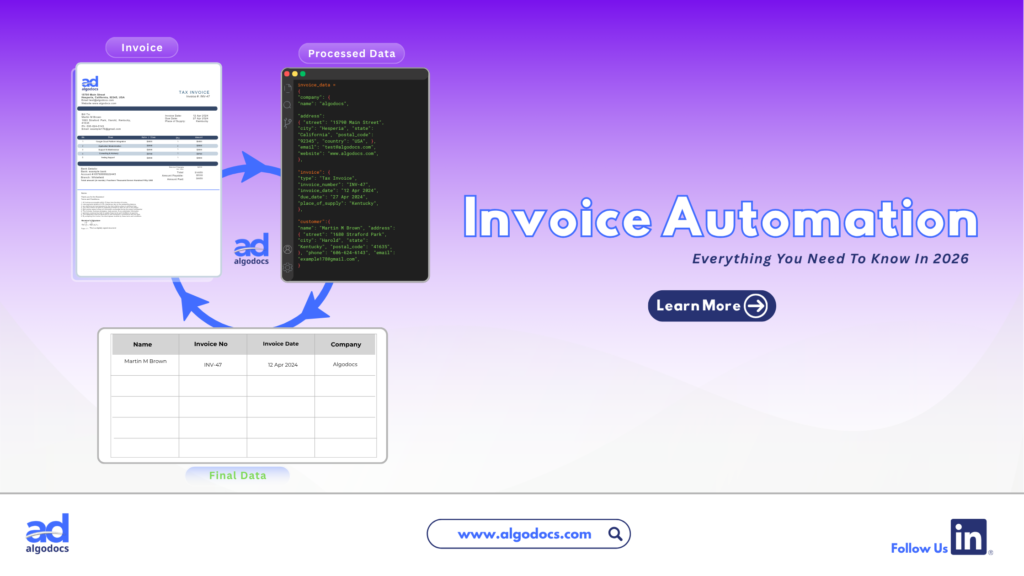
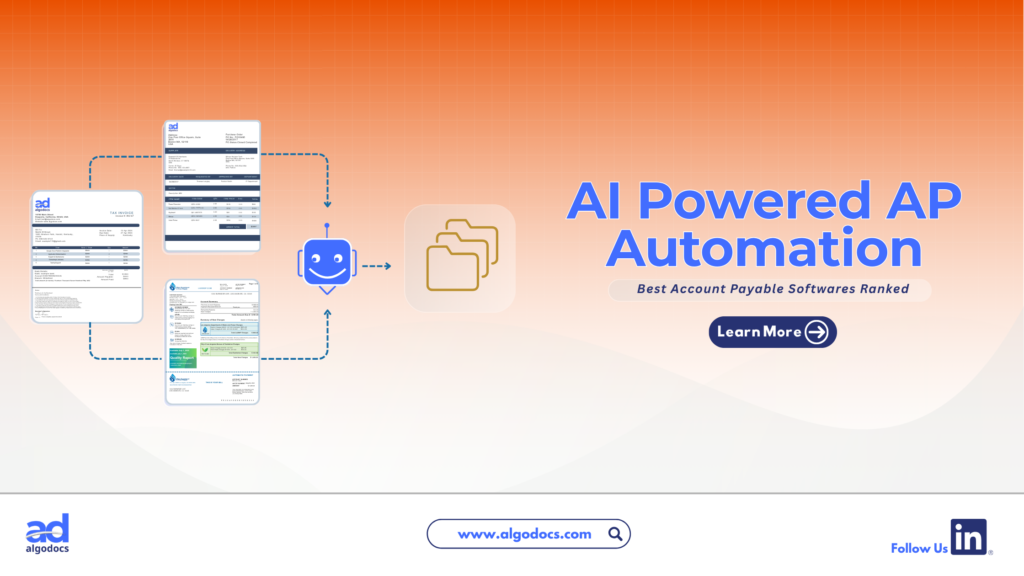
Invoice automation helps businesses handle vendor bills faster by removing repetitive manual work. Managing company finances requires speed, accuracy, and clear tracking. Modern finance teams process hundreds or thousands of bills every month. Doing this work by hand creates slow payment cycles, lost documents, and costly data entry mistakes. This complete guide explains how an automated invoice management system works, why your business needs one, key implementation best practices, and the best platforms available today.

Algodocs

How to Extract Data from Invoice: Transforming Business Efficiency with AI In 2025

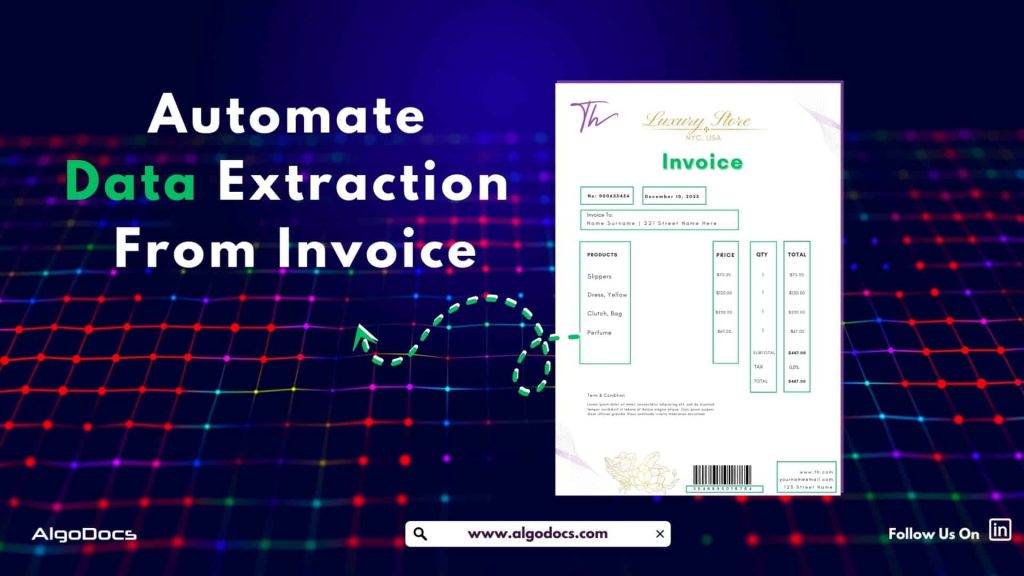
Back to Blog Table of contents On this page How to Extract Data from Invoice: Transforming Business Efficiency with AI In 2025 Home › Blog › Algodocs › How to Extract Data from Invoice: Transforming Business Efficiency with AI In 2025 Categories Algodocs Tags algodocs deep learning invoice automation Invoice Data Extraction By Shubhankar Biswas Published September 1, 2025, 07:46 Updated December 12, 2025, 19:42 In the modern, fast-paced digital world, businesses often handle a large volume of invoices and bills on a day-to-day basis. These invoices and bills contain critical information and financial details that must be extracted and processed accurately and efficiently to run the business smoothly. However, extracting data from invoices manually is both time-consuming and error-prone. This is where automated invoice data extraction becomes essential. By leveraging the power of Artificial Intelligence (AI) and Optical Character Recognition (OCR), businesses can extract data from invoices seamlessly, reducing manual efforts, enhancing accuracy, and improving operational efficiency. In this blog, we will explore the dimensions of how invoice data extraction works, the technology behind it, its benefits, challenges, and why AI-powered solutions like Algodocs are revolutionizing data extraction from invoices, saving time and cost. So, what is an invoice? An invoice is a document shared by the seller with the buyer to request payment for the service provided. In simple terms, when you, as a seller, offer services such as consultations, freelance work, or any other service, and you want the buyer to pay for the service provided, you will share a document with the buyer. This document contains essential information such as vendor details, buyer details, invoice date, payment details, service details, etc. Invoices are used in almost every industry, specifically by service providers, non-profit organizations, wholesalers, manufacturers, and other industries worldwide. What is invoice data extraction? Invoice data extraction is the process of capturing and extracting essential details from invoices and converting them into structured digital formats that can later be used for other business activities. This includes invoice numbers, dates, supplier details, line items, totals, and tax information. Automating this complex process helps businesses streamline financial operations, reduce human errors often associated with manual data extraction, and improve overall efficiency. An invoice can be a scanned image, a native PDF file, or a scanned image that has been converted into a single PDF file. How to Extract Data from Invoice Efficiently? The process of extracting data from invoices involves multiple steps to ensure accuracy and efficiency: Invoice Capture – Businesses receive invoices in various formats such as PDFs, scanned documents, and emails. AI-based systems can collect and organize these invoices for further processing. Preprocessing – Before extracting data, the system enhances the quality of scanned documents by removing noise, adjusting contrast, and correcting distortions. This step ensures better OCR accuracy. Optical Character Recognition (OCR) – The OCR technology scans the invoice to recognize and convert printed or handwritten text into machine-readable data. Data Structuring – AI-powered algorithms analyze the extracted text, identifying key fields like invoice numbers, dates, vendor names, and line-item details. The information is then formatted into a structured digital format. Validation & Verification – To ensure accuracy, the extracted data is cross-checked with predefined business rules, databases, and compliance standards. Any discrepancies are flagged for review. Integration & Storage – The verified data is stored in databases or seamlessly integrated into enterprise resource planning (ERP) systems, accounting software, or other financial management tools for further use. Technologies Used to Extract Data from Invoice AI and machine learning advancements have significantly improved invoice data extraction. The core technologies involved include: Optical Character Recognition (OCR): OCR is the core technology that converts printed and handwritten text into digital formats, enabling automated data extraction from invoices with high accuracy. Natural Language Processing (NLP): Helps the system understand invoice structures, identify key information, and improve data classification. Machine Learning (ML): Learns from past extractions to enhance accuracy, adapt to different invoice layouts, and predict missing data fields. Robotic Process Automation (RPA): Automates repetitive tasks such as invoice sorting, classification, and data entry into accounting systems. Intelligent Document Processing (IDP): Combines OCR with AI, NLP, and ML technologies to understand invoice context, extract relevant details, and organize structured data. IDP is a new phenomenon that handles challenges like skewed and blurry invoices, extracting data with precision and speed where traditional OCR fails. Benefits of Extracting Data from Invoice Automatically Looking For The Best All-In-One Invoice Data Extraction Tool? Try Algodocs Invoice Data Extraction Tool For Free and Access All The Paid Features For Free. Create A Free Account Today Create Free Account Automating invoice data extraction offers multiple advantages: Increased Efficiency – AI-driven automation eliminates the need for manual data entry, significantly reducing processing time and improving workflow efficiency. Improved Accuracy – Automated systems minimize human errors in data extraction, ensuring high precision and reliable financial records. Cost Savings – Businesses can cut down labor costs and operational expenses associated with manual invoice processing. Faster Payments & Approvals – Streamlined data extraction allows for quicker invoice approvals, enabling faster payments and improving vendor relationships. Scalability – AI-powered tools can handle thousands of invoices per day, making them ideal for businesses experiencing rapid growth. Better Compliance & Security – Automated extraction ensures adherence to financial regulations, reduces fraud risks, and provides a secure audit trail. Seamless Integration – Extracted data can be effortlessly integrated with ERP, accounting, and financial management software, enhancing workflow automation. Challenges in Extracting Data from Invoice Despite its benefits, invoice data extraction presents certain challenges: Invoice Format Variability: Different vendors use different invoice formats, which can complicate automated data extraction. AI-based solutions continuously learn and adapt to various templates. Handwritten Text Recognition: While OCR can process printed text efficiently, handwritten invoices, poor-quality scans, and smudged text may reduce extraction accuracy. Complex Data Structures: Some invoices contain intricate tables, multiple tax categories, and detailed line items that require advanced data processing capabilities. Integration Issues: Businesses may face technical difficulties integrating extracted data with existing accounting or ERP systems without proper API support. Initial Setup Costs: Implementing AI-powered invoice extraction requires investment in software,

invoice extraction, Logistics Data Extraction

SKU List Data Extraction With Artificial Intelligence and IDP: Benefits, Features, Risks & More

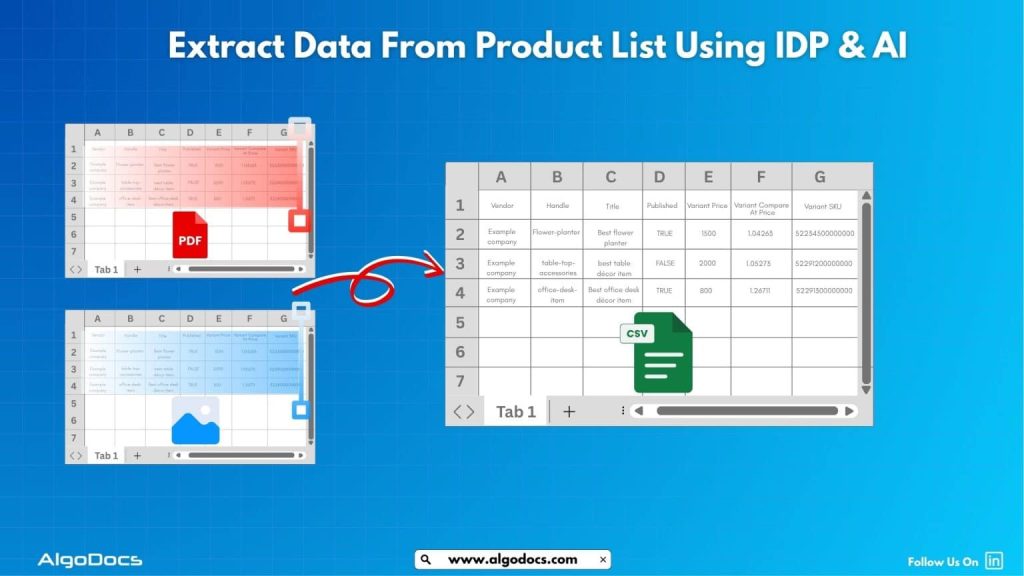
Back to Blog Table of contents On this page SKU List Data Extraction With Artificial Intelligence and IDP: Benefits, Features, Risks & More Home › Blog › invoice extraction › SKU List Data Extraction With Artificial Intelligence and IDP: Benefits, Features, Risks & More Categories invoice extraction Logistics Data Extraction Tags data extraction Invoice Data Extraction Logistics By Shubhankar Biswas Published September 1, 2025, 06:42 Updated July 21, 2026, 08:07 What is An SSKU List Data Extraction With Artificial Intelligence and IDP: Benefits, Features, Risks & MoreKU List? The paradigm shift of global shoppers has changed from offline to online in recent years. The eCommerce industry is currently a $7.5 trillion economy and is growing at a very fast pace according to a report. This rapidly growing eCommerce economy has given birth to many big platforms as well as small eCommerce businesses. Many traditional retail businesses have transitioned their business model from offline channels to online channels in recent years. And this transition has increased their sales and revenue. Now eCommerce businesses thrive on many factors such as their business model, where their customers are, how they want to target their customers, and how the sold product will be delivered to the customer. Unlike a physical store that is only able to display and market a limited number of inventory items, an online store is able to display and share countless numbers of items without requiring much space and manpower. With such a large number of products and items, businesses need to maintain a list of product data which is known as an SKU list. An SKU list is used in both online and offline channels. But data extraction from an SKU list is a challenging task. Due to the number of items, various fields, and tables, data extraction becomes a challenging task. The old manual data extraction method is prone to human errors and data accuracy remains a big challenge. But with tools such as SKU list OCR, intelligent document processing, and Artificial Intelligence, SKU data extraction has become more accurate, speedy, and efficient. In this blog post, we will discuss various aspects of SKU list data extraction, including its challenges, benefits, and other key considerations. What is An SKU List? An SKU list or Stock Keeping Unit is a list of products that shows the available and sold inventory of a store. An SKU list consists of details such as product name, title, variants, color variants, size variants, SKU number, product URL, price variants, availability, etc.This helps businesses to maintain a record of what products have been sold and what is in stock, with all corresponding details of product types, variants, etc. In both online and offline businesses, the SKU list plays a vital role, but specifically in online and eCommerce businesses, it holds major importance. Difference between SKU List vs. Product List: There are many types of documents used on a day-to-day basis in online and offline businesses for various types of business activities. Documents such as bills, invoices, SKU lists, packing lists, and purchase orders are a few essential documents that are frequently used in business. But every document is different; similarly, an SKU list and a packing list are two different documents. But sometimes people get confused and consider the SKU list as a packing list. Here are the differences: Feature Packing List SKU List Purpose Details shipment contents Tracks products in inventory Scope Focuses on shipped items Covers all stock in a system Usage Used in logistics and shipping Used in warehousing and retail Contents Item descriptions, weights, packaging details Product codes, descriptions, stock levels Format Structured for shipping documentation Formatted for inventory databases Tracking Ensures shipment verification Monitors stock movement and availability Customization Focuses on shipment accuracy Includes pricing and supplier details Regulatory Role Required for customs clearance and freight calculations Not required for shipping Verification Helps buyers confirm received goods Helps businesses manage stock levels Integration Linked to shipping and order fulfilment Integrated with inventory management systems What is the Purpose of an SKU List in eCommerce? The real purpose of an SKU list is to keep a record of the items that are available or being sold by a store or business. This helps businesses manage their inventory and keep a record of which products are in stock and which have been sold. Secondly, when an online business or store fulfills an order, they can ensure that the right product has been packed and shipped to the logistics company. The third important role of an SKU list is to help with product listing in both online stores and offline stores. If a business sells its product on multiple online eCommerce platforms, then with a single SKU list, you can manage your product listings across all channels. Analysis and reporting of sold and unsold products can also be done with the SKU list.A well-maintained SKU list is the backbone of smooth eCommerce operations. But extracting and organizing this data can be tricky. What is SKU List Data Extraction? SKU list data extraction means extracting information such as product names, titles, variants, SKU ID, size, color, availability, and other information from an SKU list using automated software. The main purpose of SKU list data extraction is to improve workflow efficiency for logistics, product listing, and other decision-making activities for an online or offline store. A typical SKU list is usually generated in Excel or CSV format, but in some cases, it could be a scanned image PDF, native PDF, handwritten note, or JPG image as well.Extracting data from a long and bulky SKU list manually isn’t efficient, but tools such as SKU list OCR and Intelligent Document Processing have made this task more efficient and smoother. Challenges with SKU List Data Extraction Extracting data from an SKU list manually is not very reliable for a business. Manual SKU list data extraction poses great challenges such as: Multiple Formats:SKU lists generally come in Excel format, but sometimes they can be PDFs, scanned images, or emails as

bill of lading, intelligent document processing, passport, PDF

Bank Statement Extraction: How To Revolutionize Financial Data Management with AlgoDocs AI

Back to Blog Table of contents On this page Bank Statement Extraction: How To Revolutionize Financial Data Management with AlgoDocs AI Home › Blog › bill of lading › Bank Statement Extraction: How To Revolutionize Financial Data Management with AlgoDocs AI Categories bill of lading intelligent document processing passport PDF Tags agentic ai Invoice Data Extraction passport data extraction pdf to text Purchase Order OCR By Ibrahim Nalbant Published December 31, 2024, 11:13 Updated June 25, 2025, 16:52 Introduction In today’s world, managing financial data quickly and accurately is very important. One task that takes a lot of time is bank statement extraction. Thanks to technology, especially Optical Character Recognition (OCR), and more advanced technology like Intelligent Document Processing (IDP) and AI, this job has become much easier. This blog will explain what bank statement extraction is, why it’s needed, the challenges it presents, and the best tools for the job. We’ll also discuss how AlgoDocs’ Intelligent Document Processing (IDP) tool can make extracting bank statement data easier and more convenient. What is a Bank Statement? A bank statement is a record of all the financial transactions that have occurred in a bank account over a specific period. These bank statements can be personal or corporate financial statements. They provide a detailed overview of all the deposits, withdrawals, and other activities that have impacted the account’s balance. This includes transactions like cash deposits and withdrawals, checks written and cleared, electronic transfers, ATM withdrawals, and even interest earned or fees charged. Essentially, it’s a comprehensive summary of the account’s financial activity, allowing account holders to track their spending, monitor their income, and identify any discrepancies or unauthorized transactions. What is Bank Statement Data Extraction? Bank statement data extraction means extracting data from bank statements. These bank statements can be in PDF files, Excel files, or scanned documents. In a bank statement or a standard financial document, you will find data such as transaction details, account balances, dates, amounts, account holder names, tax details, etc. If you want to extract data from a bank statement, you can either choose the manual data extraction method or pick an online financial data extraction tool to get the job done. However, manual data extraction takes a lot of time and is prone to errors, which can create more problems. That’s why businesses these days often use bank statement OCR to make data extraction easy and effective. Why Bank Statement Extraction is Needed Many businesses handle a large number of financial receipts, bank statements, and financial records as part of their daily operations. Extracting and organizing this vast amount of data can be a challenging task. Here are some key reasons why bank statement extraction is essential: Financial Analysis: Extracting data from bank statements allows businesses to understand their spending patterns, income sources, and overall financial activities. This analysis helps in making informed financial decisions, budgeting, and forecasting future financial needs. Bookkeeping and Accounting: Accurate data extraction simplifies the bookkeeping and accounting processes. By having organized and structured financial data, businesses can maintain accurate records and easily reconcile transactions, ensuring that their financial books are always up-to-date. Audit and Compliance: Extracting data from bank statements is crucial for meeting legal requirements and ensuring transparency in financial reporting. During audits, having organized data makes it easier to demonstrate compliance with financial regulations and standards, such as those set by tax authorities. Fraud Detection: Monitoring financial transactions through data extraction helps in detecting and preventing fraudulent activities. By analyzing bank statement data, businesses can identify suspicious patterns or unauthorized transactions, allowing them to take timely action to mitigate risks. Which Industries Require Bank Statement Extraction Many industries require efficient bank statement extraction, including: Banking and Finance: This industry relies heavily on bank statement extraction for monitoring transactions, processing loans, and managing accounts. Efficient data extraction helps in maintaining accurate records and ensuring compliance with financial regulations. Accounting Firms: Accounting firms use bank statement extraction to prepare financial statements and provide tax services. Accurate data extraction simplifies the accounting process, making it easier to maintain precise financial records and ensure timely tax compliance. Legal Firms: Legal firms need bank statement extraction for forensic accounting and legal support. Extracted data can be crucial in investigating financial discrepancies, supporting legal cases, and providing accurate financial evidence in court. Healthcare: The healthcare industry uses bank statement extraction for handling payments and processing insurance claims. Efficient data extraction helps in managing patient billing, ensuring accurate insurance claim processing, and maintaining financial transparency. E-commerce and Retail: E-commerce and retail businesses rely on bank statement extraction to manage cash flow and vendor payments. Extracted financial data helps in monitoring sales transactions, managing expenses, and ensuring timely payments to suppliers. Challenges with Manual Bank Statement Extraction Manually extracting data from bank statements has several problems: Time-Consuming: Entering data manually is time-consuming. Extracting data from each sheet of a bank statement requires significant time for analysis and capture, making the process even more cumbersome. Error-Prone: Human errors can lead to inaccurate records. Manual data extraction is prone to mistakes, as human eyes can’t always interpret everything correctly. This can result in serious consequences, such as data extraction errors, missed valuable data, and other issues. High Costs: Manual data extraction is costly because it requires employing more personnel to extract data from documents. This ultimately increases the operational costs for the company. Scalability Issues: With manual data extraction, you can’t adjust the number of personnel based on requirements. Therefore, scalability options with manual data extraction are very limited. Data Security: When your data is exposed to human intervention, there is a risk that it can be misused for illegal activities. Bank statement data is very sensitive, and exposure to the wrong hands can lead to serious trouble for individuals or organizations. What is a Bank Statement OCR? Optical Character Recognition (OCR) is a technology that converts various types of documents, such as scanned papers, PDFs, or images, into editable and searchable data. A bank statement OCR specifically

Scroll to Top